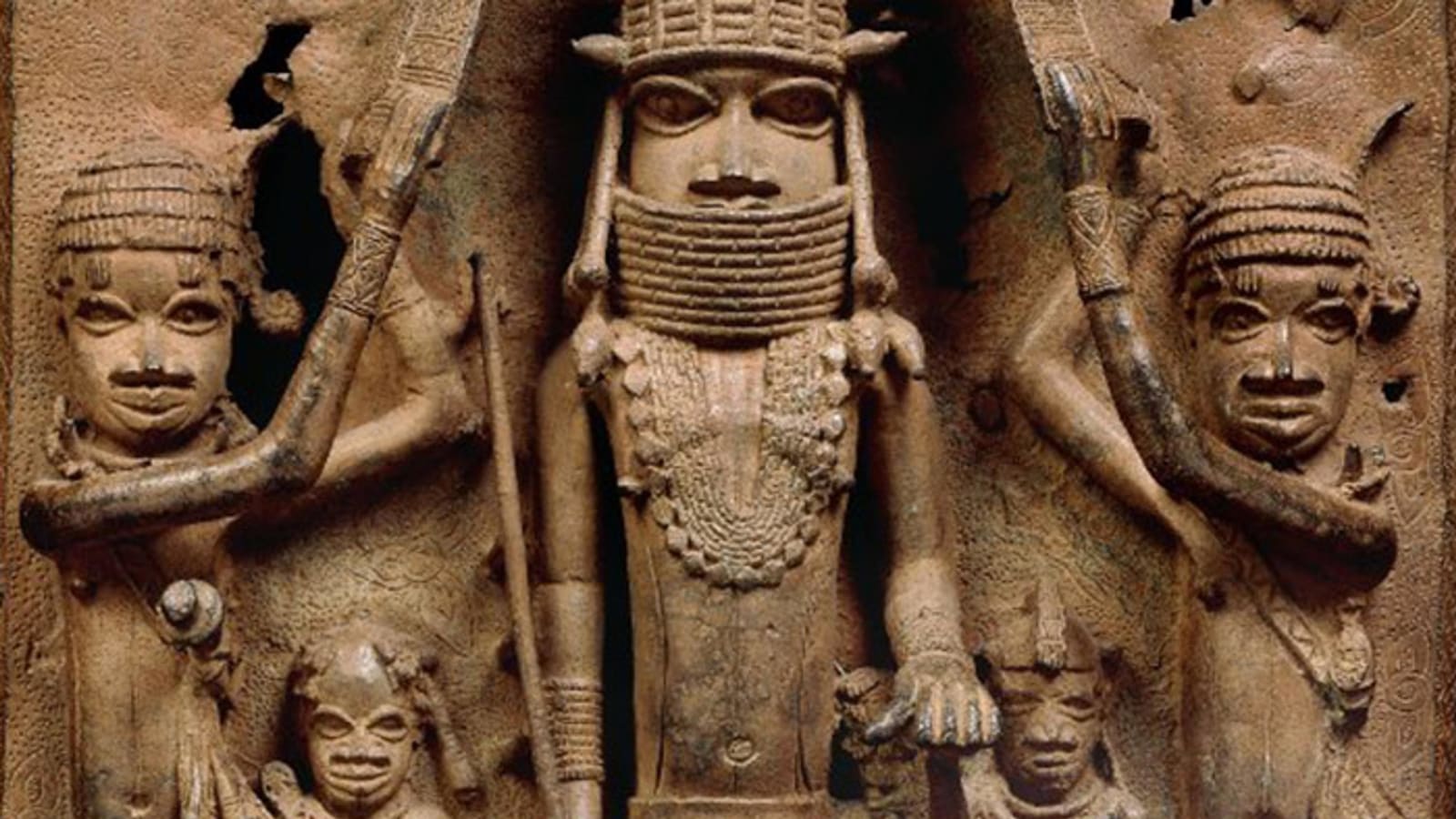
Many people still think Africa’s story began when Europeans arrived but that idea is wrong.
Long before colonisation, Nigeria had organised societies, skilled artists, systems of leadership and these societies built, traded, created, and believed in ways that still affect culture today.
This is about the three ancient Nigerian civilisations that show Africa had a deep and rich history long before foreign rule.
The Nok Civilisation: Nigeria’s earliest known culture

Nok terracotta art shows early creativity and identity in Nigeria
The Nok Civilisation is one of the earliest known cultures in Nigeria, it existed from around 1000 BC to 300 AD in what is now central Nigeria.
The Nok people are known for their terracotta sculptures. These clay figures often show human faces with detailed hairstyles, expressions, and body features; its level of detailing shows a strong sense of identity and artistic skill.
The Nok are also among the earliest people in West Africa to work with iron. They made tools for farming and hunting, which helped them grow food and build stable communities.
Historians who study Nok civilisation history see evidence of organised settlements, creativity, and knowledge. This alone challenges the idea that early African societies lacked structure or development.
Igbo Ukwu: Advanced metalwork and spiritual culture

Igbo Ukwu metalwork shows advanced technology and culture
Around the 9th century AD, a community in eastern Nigeria created some of the most detailed metalwork ever found in Africa. This place is known as Igbo Ukwu.
The Igbo Ukwu artifacts include bronze and copper objects such as pots, ornaments, and ceremonial items. The designs are complex and many pieces have fine patterns and delicate details that are hard to produce even with modern tools.
Beyond decoration, these objects had spiritual and social meaning. Some were used in rituals, while others showed status and authority. This shows that Igbo Ukwu society had belief systems, leadership structures, skilled craftsmen who understood both art and science, and they were not waiting for external influence to become advanced.
The Yoruba civilisation: Kingdoms, leadership, and masterpieces

Ile-Ife art is one of the most realistic sculpture traditions in Africa
In southwestern Nigeria, the Yoruba civilization built powerful kingdoms such as Ile-Ife and Oyo and these cities became centers of politics, culture, and trade.
Yoruba society had organised systems of governance. Kings, known as Obas, ruled with the support of councils and chiefs. This structure helped maintain order and manage large populations and it shows that pre-colonial Nigeria governance was already developed and effective.
The art from Ile-Ife is one of the most respected in African history. Artists created bronze and brass heads that look very realistic, with accurate facial features and proportions. When Europeans first saw these works, many could not believe they were made in Africa because of how advanced they were.
The Yoruba civilisation also influenced language, religion, and culture that still exist today. Many traditions practiced in Nigeria and across the African diaspora can be traced back to this period.
Learning about these civilisations changes the view about Africa. It's a reminder that there was knowledge, systems, and creativity long before foreign rule.
Understanding this history helps build confidence and cultural pride, it also helps correct false ideas that have been repeated for years. When people learn about the Nok, Igbo Ukwu, and Yoruba civilizations, they begin to see that Africa's heritage is strong and valuable.
Africa was never empty and without history. The Nok, Igbo Ukwu, and Yoruba civilizations are evidence that the land was full of life, ideas, and achievement way before colonisation.
2026 Bernice Temitayo Olusaiye | Talkafricang.com


Comments (0)
Leave a Comment