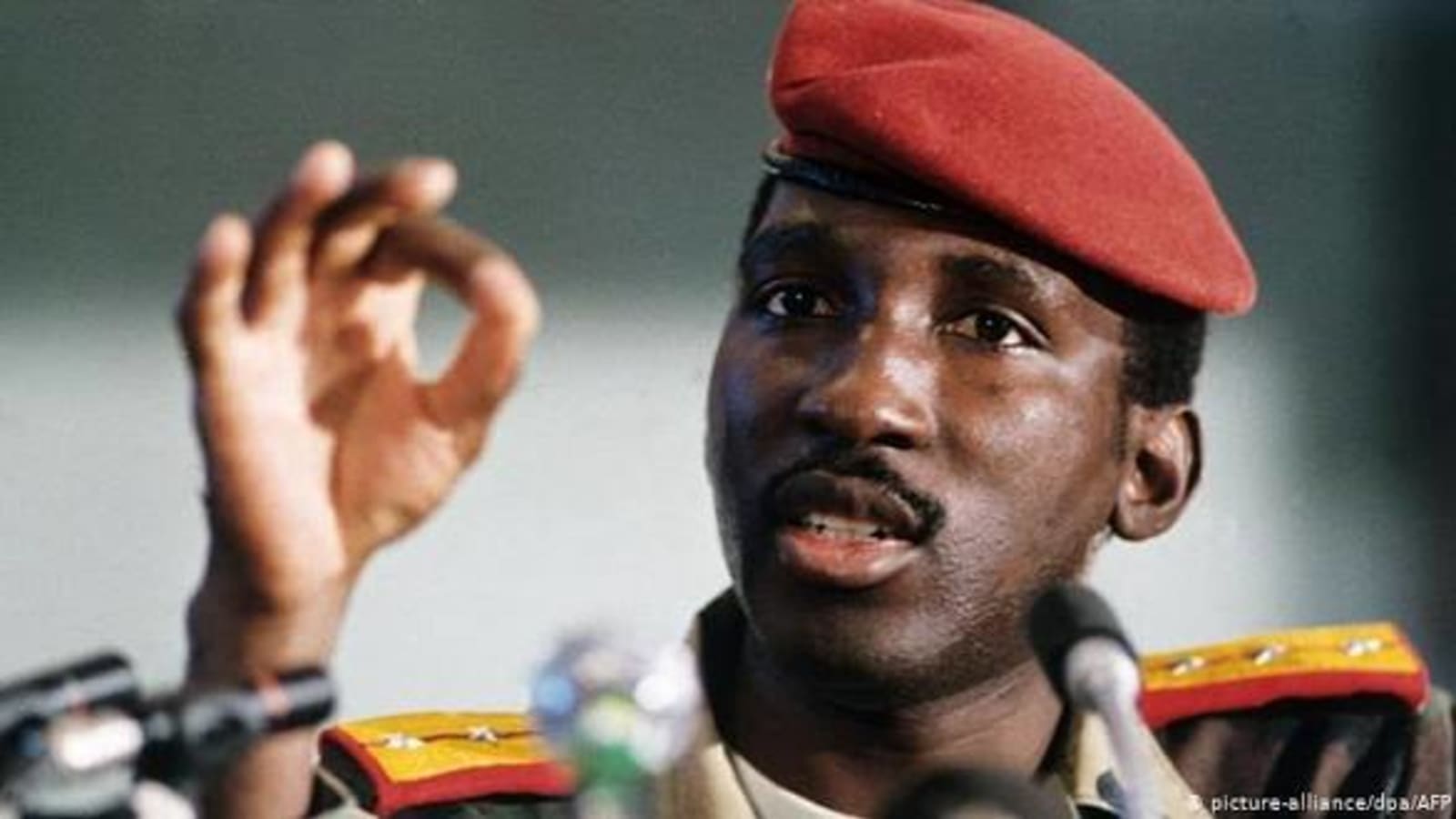
On the anniversary of Thomas Sankara’s killing, we look at how the country’s current leader uses his legacy, and what the record shows for Burkina Faso and the continent.
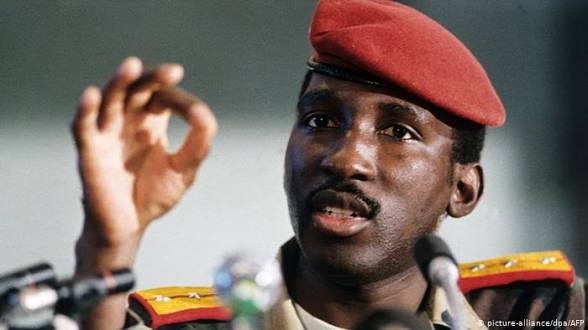
THOMAS SANKARA
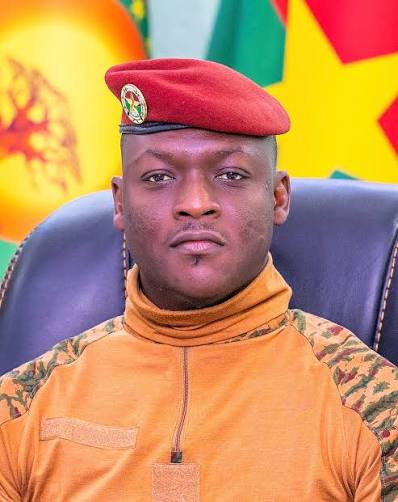
IBRAHIM TRAORÉ
Thirty-nine years ago today, on 15 October 1987, Burkina Faso’s young president, Thomas Sankara, was shot dead during a coup in Ouagadougou. He was 37, and twelve of his comrades died with him. Today the country is led by another young army captain who often invokes his name: Ibrahim Traoré. The question many Africans now ask is whether Traoré is carrying Sankara’s torch or borrowing his image.
The Man Who Renamed a Country
Sankara was born in Yako in 1949, when the country was still the colony of Upper Volta. He became prime minister in January 1983 at age 33, was dismissed and jailed four months later, and took power in a coup in August that year, helped by his friend Blaise Compaoré.
In 1984 he renamed the country Burkina Faso, meaning “land of upright people.” He required officials to wear locally made cotton, challenged the power of traditional chiefs and defended women’s rights, banning excision and polygamy. His killing in 1987 brought Compaoré to power. For almost three decades, talking about Sankara was taboo in Burkina Faso. Today a large statue of him stands in Ouagadougou, close to where he died.
A Torch Lit Again
Traoré took power in a military coup on 30 September 2022 and has now led the country for four years, the same length of time as Sankara. According to Africanews, both came to power as young captains promising national sovereignty, Pan-Africanism and economic independence.
His government has worked hard to revive Sankara’s memory. The Bertelsmann Transformation Index notes that streets have been renamed in his honour, he has been declared a “Hero of the Nation,” a mausoleum has been built and the national motto has been changed.
On policy, Africanews reports that the government has nationalised gold mines, promoted local industries and launched Faso Mebo, an infrastructure programme to build roads and develop cities with local resources. Al Jazeera adds that officials point to more investment in agriculture, including rice and maize, and in local processing. Abroad, Traoré has moved away from France, strengthened ties with Russia and joined Mali and Niger in a new regional confederation. His supporters, especially among the youth, say he has restored national pride and challenged old dependencies.
The Test of the Record
The difference from Sankara’s era is security. Africanews reports that jihadist groups still affect large parts of the country, with some towns facing blockades, and Al Jazeera notes that displacement remains widespread.
Political freedoms have also narrowed. Media reports say the government dissolved political parties on 29 January 2026, and Al Jazeera reported that on 15 April 2026 it ordered the dissolution of 118 non-governmental organisations (NGOs) and civil society groups, including some involved in human rights work. The Bertelsmann index says Burkina Faso fell from 41st to 86th place out of 180 countries in the Reporters Without Borders press freedom ranking between 2022 and 2024. Critics writing in Jacobin also point to repression of trade unionists, activists and journalists.
Torch or Image?
Scholars are divided. Writing for the Review of African Political Economy, Bettina Engels argues that the reference to Sankara serves mainly as a source of legitimacy and has produced a personality cult that discourages critical debate. She also describes Traoré’s project as more pragmatic than Sankara’s.
Other scholars see greater continuity. In the same journal, Wendwoga Anselme Kiemtoré and Amber Murrey trace the anti-imperialist language of taking destiny into one’s own hands from Sankara to Traoré, showing how today’s sovereignty rhetoric deliberately echoes the revolutionary discourse of the 1980s. Ndongo Sylla, a Senegalese economist also writing in the Review of African Political Economy, places both men within a wider generational revolt against gerontocratic, France-aligned civilian rule, arguing that military coups have opened the main window for young, anti-neocolonial leaders to reach state power in the franc zone.
Traoré himself has urged caution. TRT Afrika reports that he told local stakeholders that a new Sankara may not exist today, because the context has changed greatly since the 1980s.
What It Means for Africa
Beyond Burkina Faso, Traoré has become a symbol for many Africans who want a clean break from the colonial past, and his alliance with Mali and Niger challenges the established regional order. He remains a polarising figure, even among Pan-Africanists and the left, according to Jacobin.
Al Jazeera notes that Traoré has been highly effective in turning sovereignty into a powerful political message. The harder question, it says, is whether that message can deliver the security and justice that many Burkinabé people expect.
Thirty-nine years on, Sankara’s name still carries enormous weight across Africa. Whether today’s results live up to that name is a question Burkinabé citizens, and the rest of the contin
ent, will keep asking.


Comments (0)
Leave a Comment