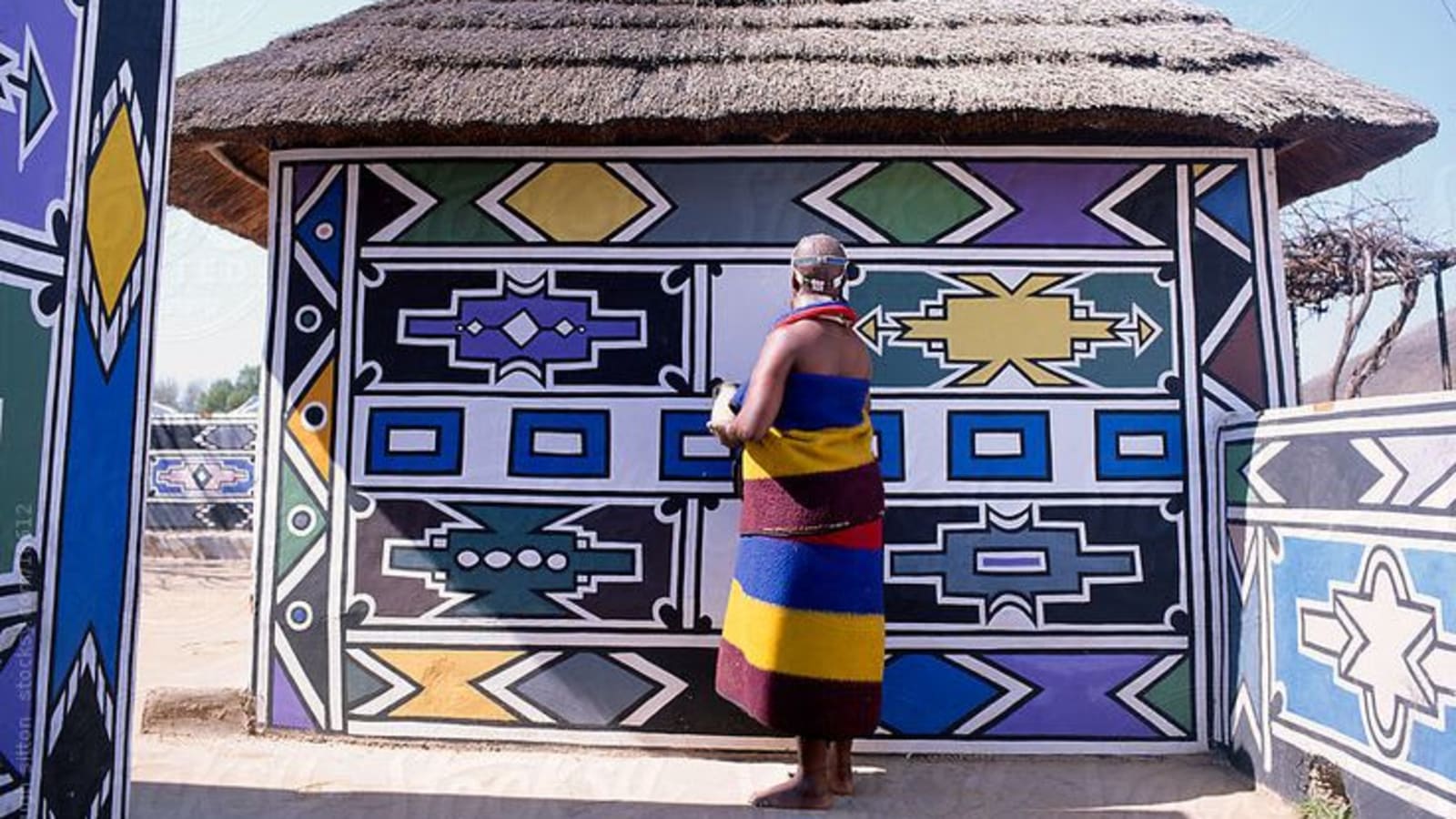
We move out everyday, we see houses, buildings and all but unlike the usual buildings, houses are turned into canvases, languages, family stories and declaration of identities . Among the Ndebele people of South Africa, walls can do all of these things.
With bold geometric patterns, beautiful colors, beadwork and unique traditional clothing, the Ndebele have developed one of the most recognizable visual cultures in Southern Africa. Their art is so different that their patterns have travelled far beyond the communities where they originated, finding their way into contemporary fashion and galleries . Behind the colors is a much deeper story. It is a story about identity, women, resilience, tradition and a people determined to preserve a sense of belonging.
The Ndebele are a Nguni-speaking people of Southern Africa. In South Africa, Ndebele communities are particularly associated with Gauteng and Limpopo, although different Ndebele groups have different histories and cultural practices. The Southern Ndebele, are the group most strongly associated with the colorful house paintings, elaborate beadwork and distinctive ceremonial clothing that have become internationally recognized as Ndebele art. When you Walk into a traditional Ndebele house , the first things likely to catch your attention is color. From black outlines, white backgrounds, red, yellow, blue, green, geometric shapes arranged and many more. Triangles, rectangles, lines and patterns appear to come together almost effortlessly.
But Ndebele wall painting is not simply decoration. The art became an important way of expressing and maintaining Ndebele identity. South African cultural sources describe beadwork, wall paintings, architecture and distinctive clothing as tangible expressions through which Ndebele communities maintained a sense of belonging. The walls could therefore say something that words could not always say openly.
One of the most remarkable aspects of Ndebele art is the central role played by women. Traditionally, Ndebele women have been the primary creators and custodians of the colorful wall paintings and much of the community's beadwork. The knowledge and techniques have been passed from mothers and grandmothers to younger generations. A young girl does not simply wake up one morning knowing how to create these patterns. She carefully watches, learn, practices and inherits knowledge, and when she becomes good at it, she creates. This makes Ndebele art more than an artistic tradition. It is also a form of intergenerational education. Imagine If the walls of the Ndebele people are expressive, the clothing will not be left out. Ndebele women are particularly known for elaborate beadwork and ceremonial clothing.
According to sources, traditional adornment can communicate information about a woman's age, marital status and social stage. Married women, for example, have traditionally worn distinctive garments and ornaments, including beads, blankets and head coverings. The beadwork is therefore not simply jewelry or just for fashion. It can function as a visual language. These objects can communicate unspoken aspects of the wearer's identity and place within the community. It is something that can be worn on the body while carrying cultural information. As an outsider, you can look at Ndebele art and see only bright colors and beautiful geometric patterns. But color is only the surface, behind the colors is memory, identity, social meaning and history. That makes the famous Ndebele colors even more powerful.
Today, Ndebele inspired patterns can be seen far beyond traditional surroundings. Designers have drawn inspiration from the various color combinations, even the patterns have appeared in contemporary art, fashion, public spaces and commercial design. A cultural identity that was once expressed within a village can eventually be recognized around the world, is that not nice? That is actually the beauty of living tradition.
You may see this as just painting but the Ndebele do not simply paint their homes, they leave pieces of themselves on the walls.
Esther Ojoma Sule| Talk Africa ng.com



Comments (0)
Leave a Comment