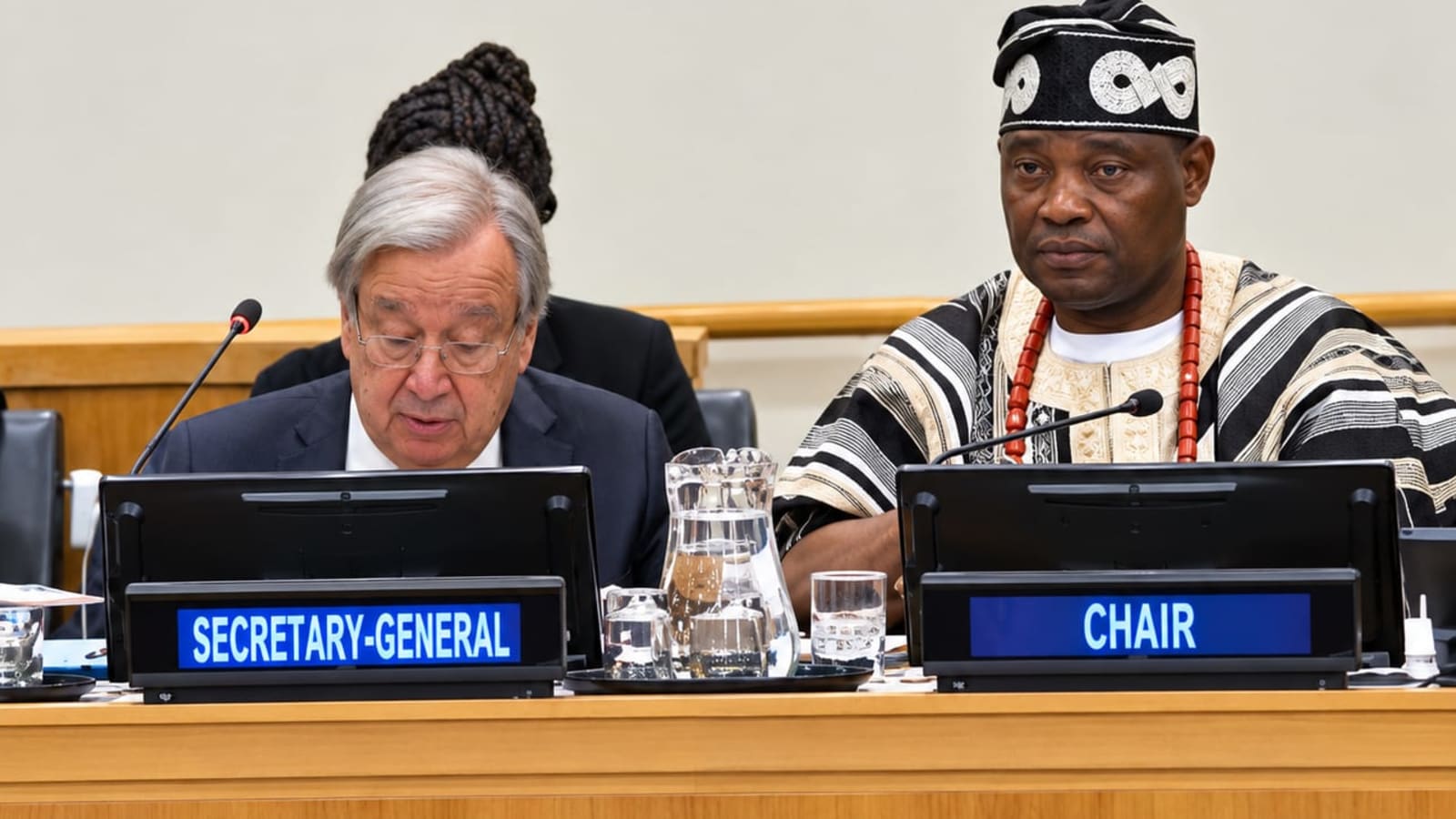
Nigeria has been elected to the United Nations Human Rights Council after
securing 172 votes in an election held at the UN General Assembly in New
York on Tuesday, 13 October 2026. The country will serve a three-year
term beginning on 1 January 2027 and ending on 31 December 2029.
UN member states to reject candidates whose records raise serious
concerns. These criticisms have renewed questions about how the council
can ensure that its members meet the standards expected of a body
established to protect human rights.
Nigeria's election therefore brings both an opportunity and a responsibility.
While membership gives the country a greater role in international human
rights discussions, it also places its conduct and contributions under
scrutiny. Countries serving on the council are expected to uphold high
standards in the promotion and protection of human rights and to cooperate
with its work.
The council does not have the power to enforce all its recommendations
directly, but it can examine reported abuses, appoint independent
investigators in certain situations and put pressure on governments to
address human rights concerns. Its influence depends partly on the
willingness of member states to cooperate with its decisions and
recommendations.
Nigeria was one of four African countries elected to the 47-member council.
Zambia received 177 votes, Ghana secured 173, while Nigeria followed
closely with 172 votes. Burundi received 160 votes to take the fourth
African seat. A total of 181 valid votes were recorded in the election.
The other countries elected on Tuesday were Brazil, the Dominican
Republic, Germany, Ireland, Japan, Jordan, Kuwait, Nepal, the Republic of
Moldova, Ukraine, Uruguay, Zambia, Ghana and Burundi. The new
members will represent their respective regional groups as they participate
in discussions on human rights issues around the world.
Established in 2006, the United Nations Human Rights Council is
responsible for promoting and protecting human rights globally. With its headquarters in
Geneva, Switzerland, the council examines allegations of human rights
violations, reviews the human rights records of member states and makes
recommendations aimed at improving the protection of fundamental
freedoms.
Nigeria's election comes with expectations about how the country will
contribute to the council's work, particularly on issues relating to justice,
security, discrimination and the protection of vulnerable groups. Its
membership will provide a platform for Nigerian representatives to
participate in international discussions and decisions on these matters.
However, the election has also attracted criticism from human rights
organisations over the lack of competition among the candidates. In a
report published on Tuesday, 13 October, the Associated Press reported
that all 15 countries were elected without contested races because the
regional groups had nominated exactly the number of candidates needed
to fill the available seats.
Human Rights Watch criticised the process and raised concerns about the
human rights records of some of the successful candidates, including
Nigeria. The organisation also called for more competitive elections to allow.
© 2026 Aliu Azeema |
TalkAfricang.com

Comments (0)
Leave a Comment