
Prehistoric Beginnings and Ancient Peoples
Nigeria’s story is more than dates and borders it is the journey of a land rich in diversity, ancient civilizations, cultural brilliance, and resilience. Long before the name "Nigeria" existed, people here built kingdoms, created art, led empires, and established systems of governance that shaped not only West Africa but the world.
Long before written records, Nigeria’s land was inhabited by early humans. Archaeological evidence shows that people lived, hunted, and developed tools here thousands of years ago even before the great pyramids of Egypt were built.
Let’s take you through the powerful history of Nigeria from its ancient roots to its rise as Africa’s giant:
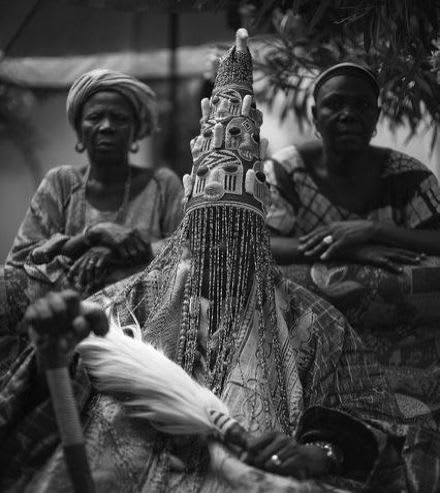
NOK Civilization
The Nok civilization is one of the earliest known ancient cultures in West Africa, flourishing between approximately 1000 BCE and 300 CE in what is today central Nigeria. This civilization is incredibly important because it shows us that complex societies with skilled craftsmanship existed in Africa long before many modern historical records.
One of the most remarkable things about the Nok people is their mastery of terracotta sculptures. These are clay figures and statues, often depicting humans and animals, made with great detail and artistic skill. These sculptures give us a unique window into their culture, beliefs, and daily life, even though the Nok left no written records.
Besides their art, the Nok were pioneers in iron smelting a technology that allowed them to produce iron tools and weapons. This was a huge step forward for their society, enabling better farming, hunting, and defense. The use of iron also set the foundation for later West African civilizations and helped shape the region’s development.
Archaeological discoveries of Nok sites have revealed settlements with evidence of farming, pottery, and trade, indicating a well-organized and thriving society. Despite their significance, much about the Nok remains a mystery, fueling curiosity and ongoing research.
In essence, the Nok civilization represents a powerful chapter in African history, reminding us of Africa’s rich heritage of innovation, culture, and artistic expression thousands of years ago.
Having explored the fascinating Nok civilization, one of Africa’s earliest advanced societies, we now move forward in time to the Pre-Colonial Era of Nigeria. This period, which spans from the decline of the Nok culture up until the arrival of European colonizers in the late 19th century, is marked by the rise of powerful kingdoms and empires that shaped the social, political, and economic landscape of the region.
The Pre-Colonial Era of Nigeria
The Pre-Colonial Era in Nigeria refers to the period before European colonization, characterized by the rise and development of diverse and sophisticated kingdoms and societies. This era showcases the rich cultural heritage, political organization, and economic systems that laid the foundation of modern Nigeria.
Among the most notable societies were the Hausa City-States* in the north, renowned for their skilled trading networks, Islamic scholarship, and fortified cities like Kano and Katsina. The Yoruba Kingdoms in the southwest, such as Ife and Oyo, were celebrated for their art, especially bronze casting, and complex governance systems under powerful kings known as Obas.
In the south, the Benin Empire flourished with its well-structured bureaucracy, impressive walls, and extraordinary bronze artworks that captured the kingdom’s history and power. These empires and kingdoms thrived on agriculture, trade (both local and trans-Saharan), craftsmanship, and vibrant social systems.
The Pre-Colonial Era was a period of dynamic interaction, warfare, alliances, and cultural exchange that shaped the identity and legacy of Nigeria long before colonial influence reshaped the continent.
The Colonial Era of Nigeria
The Colonial Era in Nigeria began in the late 19th century, marked by the arrival and eventual control of British colonial powers over the diverse Nigerian territories. The period officially started with the Berlin Conference of 1884-1885, where European powers divided Africa among themselves, without regard for existing African cultures and kingdoms.
In 1914, the British formally amalgamated the Northern and Southern protectorates to create the colony of Nigeria. This unification was mainly for administrative convenience rather than cultural or political unity. The British ruled Nigeria through indirect rule, using traditional rulers like Emirs and Obas to enforce colonial policies while keeping local governance structures.
Economically, the colonial government focused on exploiting Nigeria’s resources. They developed infrastructure like railways and ports mainly to export raw materials such as palm oil, cocoa, groundnuts, and later, minerals like tin and coal. However, colonial policies also disrupted traditional economies and social systems.
The colonial period saw the rise of Western education and Christian missionary activities, which played a significant role in shaping Nigeria’s modern intellectual and political elite. This era also witnessed the beginnings of nationalist movements and resistance against colonial rule, setting the stage for Nigeria’s eventual independence in 1960.
The Struggle for Independence
Nigeria’s journey to independence was marked by years of political activism, social reforms, and unity among diverse ethnic groups against colonial rule. During British colonialism, Nigerians faced economic exploitation, limited political representation, and racial discrimination.
From the 1920s, Nigerian nationalists, including figures like Nnamdi Azikiwe, Obafemi Awolowo, and Ahmadu Bello, emerged to challenge colonial authority and demand self-governance. Political organizations such as the National Council of Nigeria and the Cameroons (NCNC), Action Group (AG), and Northern People’s Congress (NPC) played key roles in mobilizing Nigerians.
Key events such as the Aba Women’s Riot of 1929, protests, and strikes showed growing resistance to colonial policies. After World War II, increased political awareness and global movements for decolonization intensified demands for independence.
Constitutional reforms gradually increased Nigerian participation in governance, culminating in the 1954 constitution that granted regional autonomy. Finally, after sustained pressure and negotiations, Nigeria was granted independence on October 1, 1960, peacefully transitioning from colonial rule to a sovereign nation.

The Post-Colonial Era of Nigeria
Nigeria gained independence from British colonial rule on October 1, 1960, marking the beginning of the post-colonial era. This period is characterized by Nigeria’s efforts to build a unified nation from its diverse ethnic groups and regions, while establishing political, social, and economic structures independent of colonial powers.
After independence, Nigeria adopted a federal system of government to manage its complex ethnic and regional diversity, which included major groups such as the Hausa-Fulani in the North, Yoruba in the Southwest, and Igbo in the Southeast. Despite the optimism, the young nation faced numerous challenges including ethnic tensions, political instability, and economic disparities.
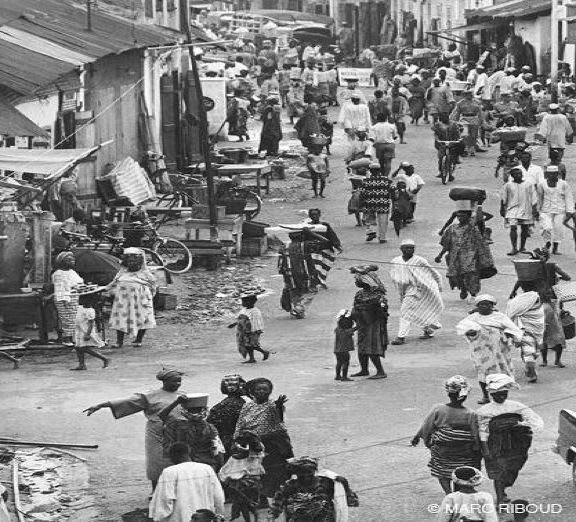
The first decade was turbulent with a series of military coups starting in 1966, followed by the Nigerian Civil War (1967-1970), also known as the Biafran War, which stemmed from ethnic divisions and attempts by the Eastern Region to secede.
Post-war Nigeria saw several military and civilian governments, with efforts to rebuild the country and diversify its economy beyond oil, which became the dominant export after its discovery in the late 1950s. The oil boom of the 1970s brought wealth but also corruption and economic challenges when oil prices fell.
Nigeria returned to civilian rule in 1999, marking the start of the Fourth Republic. Since then, it has continued to develop politically and economically, striving to overcome challenges like corruption, insurgency, and inequality while harnessing its rich cultural heritage and natural resources.
Today, Nigeria remains Africa’s most populous nation and one of its largest economies, playing a significant role in regional and global affairs.
Nigeria’s history is a rich tapestry woven from diverse cultures, ancient civilizations, and resilient peoples who have shaped its identity over centuries. From the Nok civilization’s early innovations to the complex pre-colonial societies of Hausa, Yoruba, and Igbo, Nigeria’s roots run deep. The colonial era brought significant challenges, but it also united Nigerians in a shared struggle for independence and self-determination. Today, Nigeria stands as a vibrant nation, continuously evolving while honoring its past. Understanding this history is key to appreciating Nigeria’s journey, its challenges, and the promise it holds for the future.
© Angel Tomi Olorunmonu 2026 | TalkAfricang.com



Comments (0)
Leave a Comment