
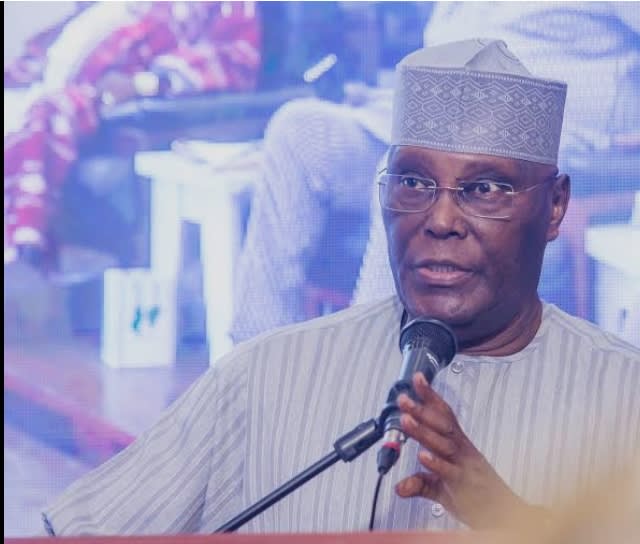
Former Vice President Atiku Abubakar has emerged as the presidential
candidate of the African Democratic Congress (ADC) after winning the
party’s primary election, a result that is already shaking up Nigeria’s
political conversations ahead of 2027.
The primary, conducted across thousands of wards nationwide using the
Option A4 voting system, saw Atiku defeat former Rivers governor Rotimi
Amaechi and businessman Mohammed Hayatu-Deen to secure the party’s
ticket. According to official results announced by the party, Atiku polled
1,846,370 votes, while Amaechi received 504,117 votes and Hayatu-Deen
secured 177,120 votes.
For many Nigerians, however, the story goes beyond the numbers.
Atiku’s emergence is being seen as another major chapter in what is
gradually becoming an intense build-up to the 2027 presidential election.
After months of speculation, coalition talks and political calculations behind
the scenes, the ADC has suddenly moved from being viewed as a smaller
opposition platform to becoming one of the most talked-about parties in the
country.
The victory also strengthens Atiku’s position as one of the biggest
opposition figures in Nigeria today.
The former vice president, who served under former President Olusegun
Obasanjo from 1999 to 2007, has contested for the presidency multiple
times and remains one of the country’s most recognised political names.
But this latest development feels different to many observers because it
comes at a time when opposition politics in Nigeria is undergoing major
changes.
In recent months, discussions around opposition unity, coalitions and
possible alliances have dominated political conversations. Several
politicians were believed to be exploring ways to build a stronger challenge
ahead of 2027, especially after debates over whether a divided opposition
could once again affect election outcomes.
Almost immediately after the results were announced, reactions flooded
social media.
Supporters of Atiku celebrated the outcome as a sign that the ADC may
now become a stronger national force ahead of the elections. Othersdescribed it as a strategic political move capable of attracting more
influential politicians into the party.
But the primary was not without controversy.
Former Minister of Transportation Rotimi Amaechi rejected the outcome,
alleging irregularities and voter disenfranchisement during the exercise.
Mohammed Hayatu-Deen also raised concerns about the process, adding
another layer of tension to the aftermath of the primary.
Despite the disagreements, Atiku used his acceptance speech to call for
unity within the party, urging other aspirants and supporters to work
together ahead of the next election cycle.
Political analysts say what happens next may be just as important as the
primary itself.
Attention is now shifting toward possible alliances, reactions from rival
parties and whether the ADC can maintain momentum as preparations for
2027 gradually intensify.
Although the election is still months away, one thing is becoming
increasingly clear: Nigeria’s political atmosphere is already heating up, and
Atiku’s emergence has added another major twist to the road to 2027.
© 2026 Aliu Azeema |
TalkAfricang.com

Comments (0)
Leave a Comment