
Finger pain might seem minor until it becomes intense, swollen, and difficult to ignore. One common cause of such discomfort is whitlow, a condition many people have seen but often misunderstand.
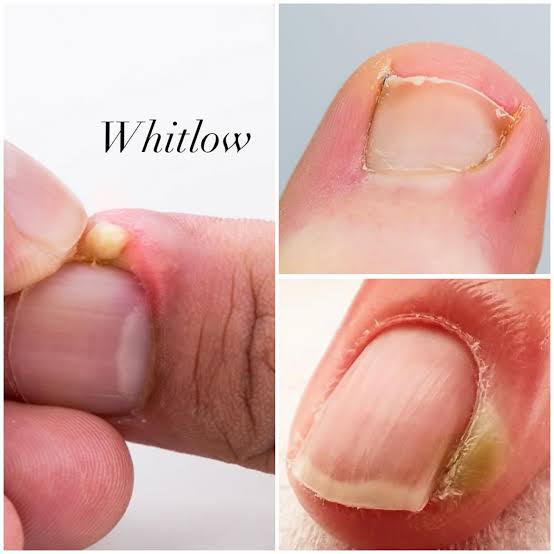
What is Whitlow?
Whitlow is a painful infection of the finger, usually affecting the fingertip or the area around the nail. It can make simple tasks like writing, typing, or even holding objects very uncomfortable.
Medically, whitlow is not just one condition, it can occur in different forms depending on the cause.
Types of Whitlow
1. Herpetic Whitlow
This type is caused by the Herpes Simplex Virus.
Key features include:
- Painful, fluid-filled blisters
- Redness and swelling
- Tingling or burning sensation before blisters appear
It is important to note that this type is viral, not bacterial, and cannot be treated with antibiotics or home remedies like lime.
2. Bacterial Whitlow (Felon or Paronychia)
This type is caused by bacteria, commonly Staphylococcus aureus.
Key features include:
- Severe throbbing pain
- Swelling and redness
- Pus formation
This type may become serious if not treated early and can sometimes require medical procedures like drainage.
Causes of Whitlow
Whitlow can develop due to:
- Cuts, injuries, or broken skin around the finger
- Nail biting or picking at the skin
- Exposure to infections (especially for healthcare workers)
- Direct contact with the herpes virus (in viral cases)
Common Symptoms
- Pain in the finger (can be severe)
- Swelling and redness
- Blisters (in viral whitlow)
- Pus (in bacterial whitlow)
- Difficulty using the affected finger
Common Myths and Misconceptions
In many communities, people use home remedies like inserting the finger into lime or applying harsh substances.
However, these methods:
- Do not cure the infection
- Can increase pain and irritation
- May damage the skin and worsen the condition
Sometimes the infection heals on its own, leading people to believe the remedy worked but medically, it did not.
When to Seek Medical Help
You should see a healthcare professional if:
- The pain becomes severe
- There is visible pus
- The swelling spreads
- You develop fever
- The condition does not improve
Early treatment helps prevent complications.
Prevention Tips
- Keep your hands clean
- Avoid biting your nails
- Treat cuts and injuries promptly
- Use protective gloves when necessary
Important Note
Do not take any medication without a doctor’s prescription.
The information provided here is for educational purposes only and should not replace professional medical advice.
Final Thoughts
Whitlow may start as a small problem, but it can quickly become painful and serious if ignored or wrongly treated.
Understanding the difference between viral and bacterial infections and avoiding harmful practices can make all the difference in proper care and recovery.
© 2026 Ukachi Rejoice| TalkAfricang.com


Comments (0)
Leave a Comment