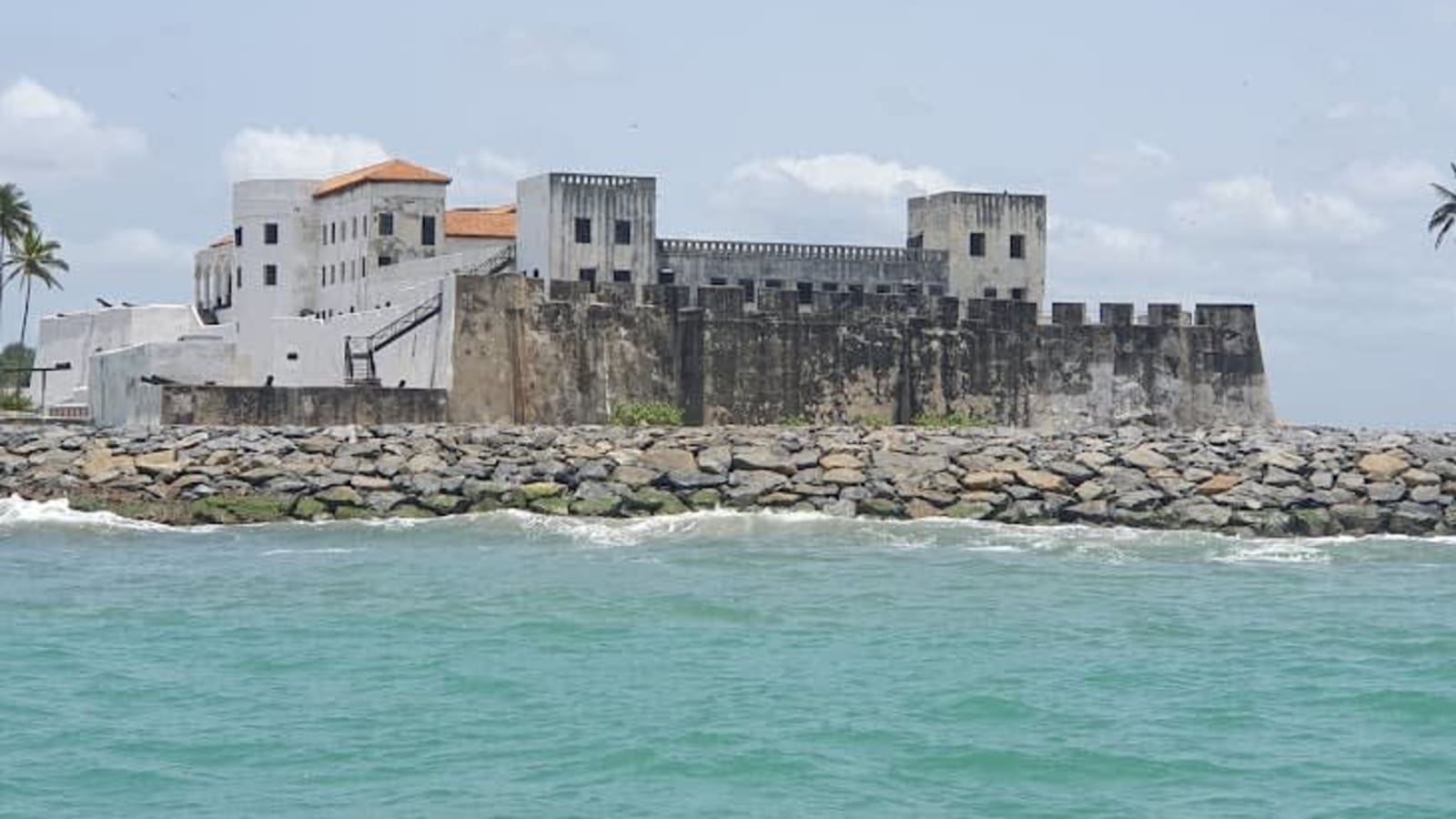

Elmina Castle is not just stone stacked by time; it is memory with walls. Sitting on the coast of present-day Ghana, it stands as one of the oldest European buildings in sub-Saharan Africa. Built in 1482 by the Portuguese and later seized by the Dutch. Elmina was first meant for trade—gold, ivory, pepper, But history swerved. The castle became a major holding point in the transatlantic slave trade, a warehouse for human lives before the long, brutal crossing of the Atlantic.

Its structure tells the story plainly. Above ground were airy quarters for European merchants and governors—light, sea breeze, control. Below were dark, suffocating dungeons where thousands of Africans were packed, starved, beaten, and stripped of identity. Men and women were separated. Hope was rationed. The “Door of No Return” was not poetic language; it was policy. Once you passed through it, you were property, not person.
Elmina is important because it exposes the mechanics of exploitation. This was not chaos; it was organized cruelty. Ledgers were kept. Profits calculated. Faith preached upstairs while suffering fermented below. The castle shows how power, when unchecked, always builds beautiful rooms for itself and cages for others. That’s an old lesson, and it still applies.
Culturally, Elmina Castle has become a site of reckoning. It draws Africans, descendants of the diaspora, historians, and truth-seekers. Libation is poured. Names are remembered. Silence is observed. The castle now functions as a museum, not to glorify the past, but to confront it. In a world that loves to move on quickly, Elmina insists we pause. Healing, after all, requires honesty.

Elmina Castle also reshapes African identity. It reminds us that resilience didn’t start after slavery; it survived through it. The people who walked those corridors were not weak—they were overpowered. There’s a difference. And knowing that difference restores dignity.
Today, Elmina stands facing the Atlantic, still, unblinking. The waves that once carried stolen bodies now carry returning footsteps. History has not changed, but the direction has.
The castle no longer ships souls.
It returns them—through memory, through truth, through the courage to remember.

Ikeun Divine Michael
© 2025 | TalkAfrica NG


Comments (0)
Leave a Comment