
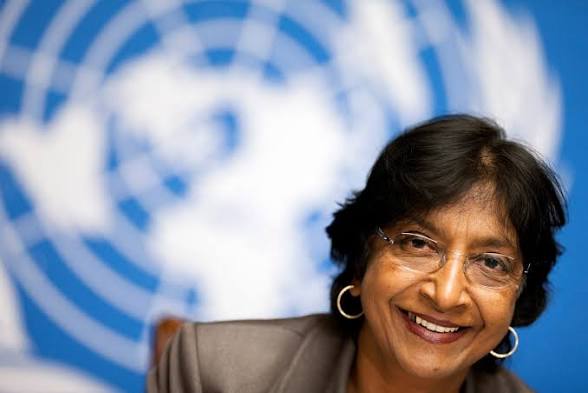
South African jurist and former UN High Commissioner for Human Rights Navanethem "Navi" Pillay was named the winner of the 2026 Nobel Peace Prize on October 9th. The Norwegian Nobel Committee honored her "for her efforts to promote peace and international law," crediting her with exceptional courage and integrity in advancing a more comprehensive global legal order, and noting her role in ensuring that war crimes, crimes against humanity, and genocide get prosecuted rather than ignored.
Pillay's win places her name alongside four other South Africans who have carried the Nobel Peace Prize before her: Albert Luthuli, Desmond Tutu, Nelson Mandela, and F.W. de Klerk. She is the first woman from South Africa to receive it and the 5th South Africa to achieve this height. For a country whose Nobel history has largely been written by men fighting apartheid from the outside of institutions, Pillay's path ran through the courtroom itself, built case by case, ruling by ruling, over more than five decades.
Her career started under apartheid, not after it. In 1967, Pillay became the first woman to open her own law firm in what was then the province of Natal, taking on legal defense work against the apartheid system at a time when very few paths existed for a woman, let alone a woman of Indian descent, to practice law at that level. She went on to earn a Master of Law from Harvard, and from there built a career inside some of the most significant international courts of her generation. She served as President Judge of the International Criminal Tribunal for Rwanda between 1999 and 2003, held a seat on the International Criminal Court, and later served as UN High Commissioner for Human Rights. She has also sat as an ad hoc judge on the Rohingya genocide case brought before the International Court of Justice.
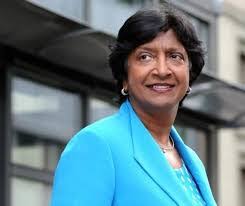
Reacting to the announcement, Pillay dedicated the prize to "all of the survivors of international crimes" and to the people still working to defend international criminal justice, whose courage, she said, keeps impunity from being allowed to reign. She also found room for humor in the moment, joking about the possibility of one day sharing a Nobel mention with Donald Trump, a nod to his repeated public campaigning for the prize in recent years.
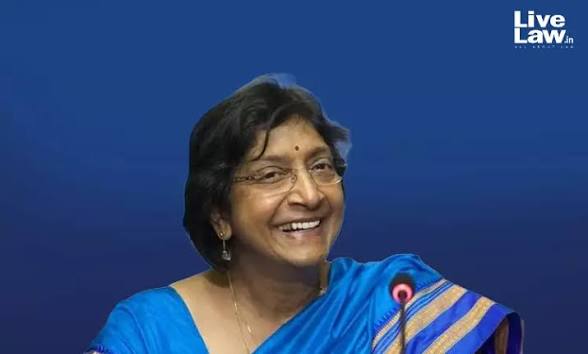
UN Secretary-General António Guterres called her "a champion of international law and human rights, and a steadfast, independent voice of justice," adding that her recognition reminds the world that peace has to be built on lasting principles rather than the will of whoever holds the most power. Volker Türk, the current UN High Commissioner for Human Rights, described the timing of her win as particularly poignant, coming at a moment when human rights face pressure from multiple directions, including from people who hold enormous power themselves.
Not every reaction was celebratory. Israel's Foreign Ministry issued a sharply critical statement following the announcement, pointing to Pillay's record on the International Criminal Court. The Nobel Committee, for its part, framed the choice as a direct message to anyone working to undermine international legal institutions, a signal that the fight for accountability still has defenders willing to be named for it.
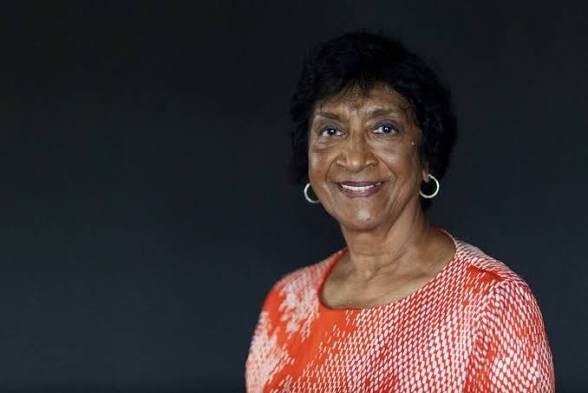
Pillay will formally receive the prize at the Nobel ceremony in Oslo on December 10. For a woman who first encountered the law at five years old, testifying in court after being robbed, the distance between that moment and this one says something on its own about where persistence can lead.
©️ Okon David Ekanem @TalkAfrica.com.

Comments (0)
Leave a Comment