
A CONTINENT REWRITING THE RULES OF STYLE, CRAFT, AND CULTURE
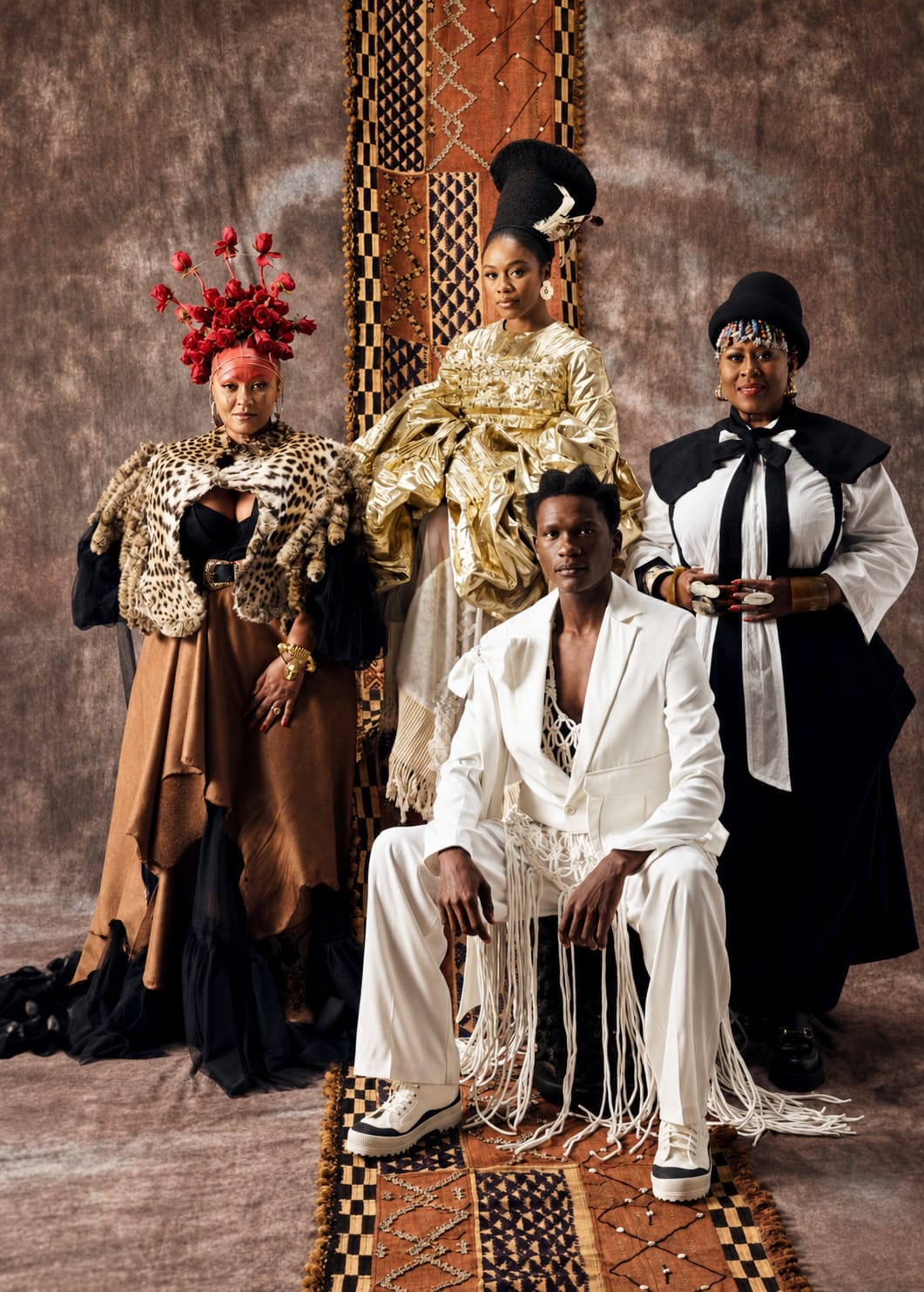
African heritage reimagined — bold silhouettes, ancestral textiles, and modern couture on one stage.
Africa is no longer waiting for a seat at fashion's global table , it is building its own, and the world is pulling up a chair. What was once framed as a source of inspiration for others has become a source of direction: innovation, craftsmanship, sustainability, entrepreneurship, and an unapologetic cultural authenticity now radiate outward from the continent rather than being filtered through it. Nowhere is this more evident than in Nigeria, one of Africa's true fashion powerhouses, where the industry's real strength is not confined to glossy showrooms but pulses through the narrow, sun-baked corridors of Lagos Island, the sprawling leather and garment markets of Aba, and the dye pits and weaving looms of Kano. Here, tailors bent over decades-old sewing machines, pattern cutters working by instinct and memory, and embroiderers with needle-steady hands form the true backbone of the industry producing world-class garments with limited resources, unreliable power, and little formal recognition, yet with a level of skill that rivals ateliers anywhere in the world. These artisans preserve techniques passed down through generations even as they adapt to modern silhouettes, digital pattern-making, and e-commerce, proving that heritage and progress are not opposing forces but collaborators. It is worth remembering that every globally celebrated African designer began exactly here — at a workbench, in a cramped shop, under a mentor's watchful eye — and that the industry's true power lies not in its stars alone but in the collective labor of everyone who touches a garment before it becomes art: the neighborhood tailor, the pattern maker, the fabric seller, and the luxury house alike.
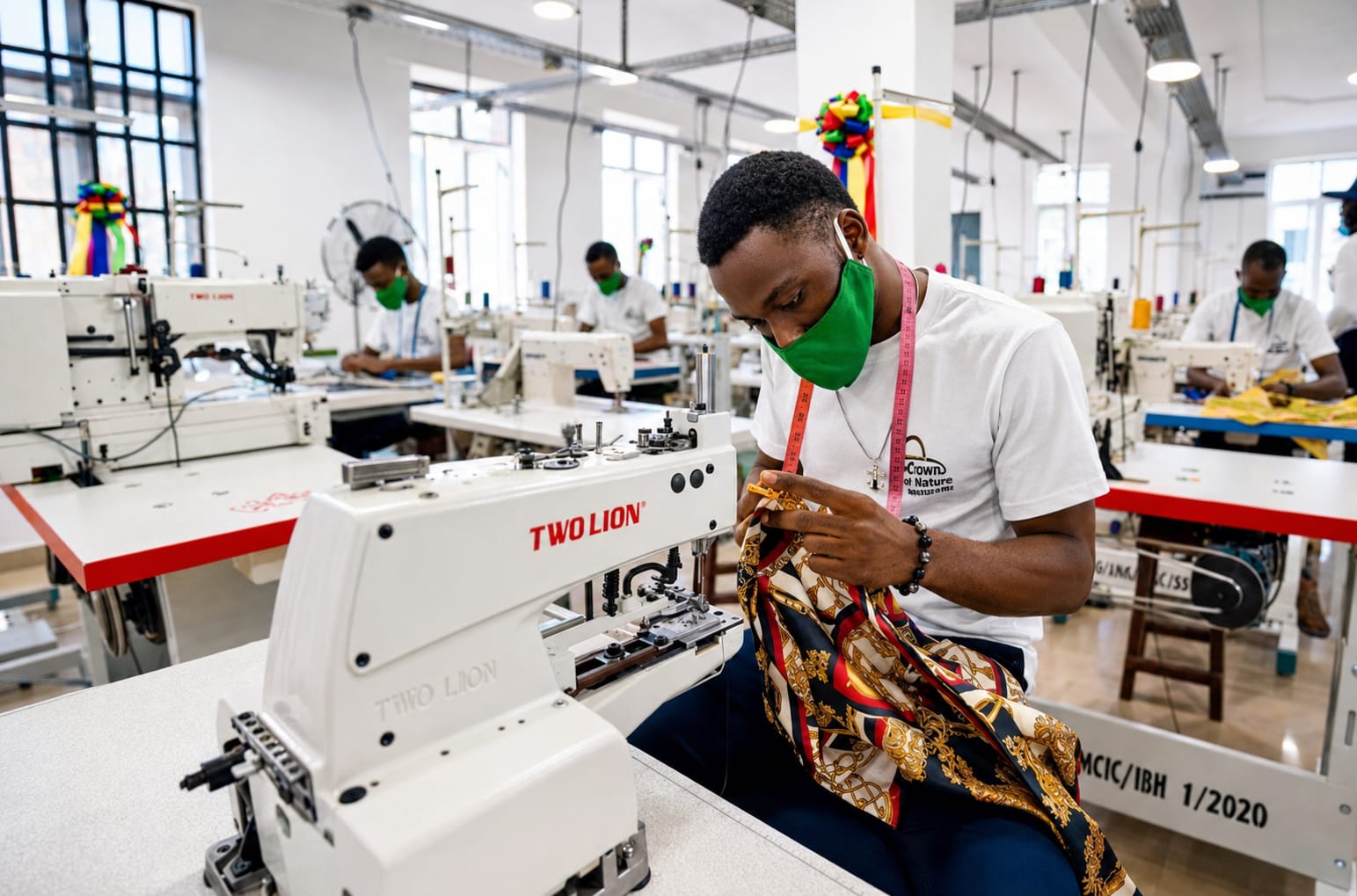
Behind every finished garment: skilled hands, humming machines, and unwavering craftsmanship in Nigeria's fashion workshops.
From these foundations have risen names that now command international attention. Nigeria's Seyi Vodi, Veekee James, Mai Atafo, Deola Sagoe, Lisa Folawiyo, Banke Kuku, and Kenneth Ize have each, in their own distinct language, elevated Nigerian fashion onto runways and red carpets far beyond Lagos. They are joined by a continental chorus of visionaries: South Africa's Thebe Magugu, whose sharp tailoring earned him the LVMH Prize, and Laduma Ngxokolo of Maxhosa Africa, who transformed Xhosa-inspired knitwear into a global luxury signature; Cameroon's Imane Ayissi, celebrated on the official Paris Haute Couture calendar; Côte d'Ivoire's Loza Maléombho, whose Afrofuturist designs blur the line between fashion and art; and Ghana's Aisha Ayensu, whose Christie Brown label has dressed some of the world's most recognisable women. What unites them is not proximity but purpose — and together with the countless tailors stitching in market stalls, they have quietly rewritten how the world sees African fashion. From anonymous hands behind sewing machines in bustling markets to designers presenting collections in Paris, Milan, London, and New York, this collective effort has replaced old stereotypes of imitation with a new understanding: Africa creates originals.
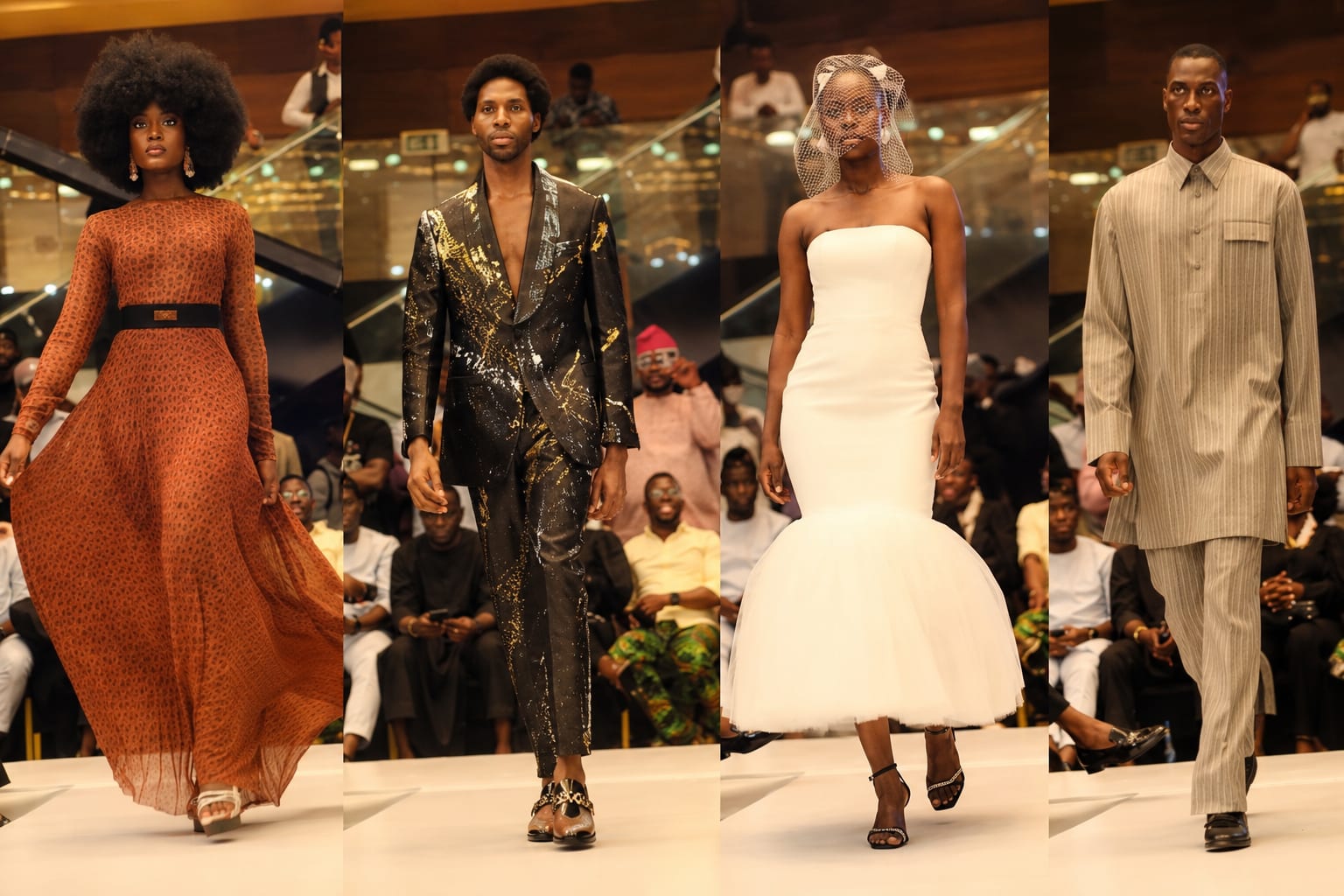
African design on the global runway — heritage fabrics and contemporary silhouettes sharing the same stage.
Central to this transformation are the textiles themselves — Ankara's bold wax-print patterns, the intricate hand-woven strips of Aso Oke, the indigo-resist artistry of Adire, Ghana's storied Kente, Mali's earth-toned Bogolanfini mudcloth, and South Africa's geometric Shweshwe — fabrics once confined to regional wardrobes that now appear on international runways, red carpets, and the shoulders of celebrities worldwide, each thread carrying centuries of meaning into contemporary style. This influence extends well beyond clothing racks, threading through luxury fashion houses, international fashion weeks, film, music, and digital media, positioning Africa not as a trend to be borrowed from but as a genuine wellspring of originality and craftsmanship. The ripple effects are tangible: fashion in Africa is creating jobs, empowering young entrepreneurs, driving exports and tourism, preserving cultural knowledge, and contributing meaningfully to national economies from Lagos to Accra to Johannesburg. And so Africa's fashion revolution continues to be written — not by a single designer or a single collection, but by millions of creative minds working in tandem: the humble tailor hunched over a machine in a small workshop long after dark, and the globally celebrated designer taking a final bow in Paris, both essential authors of the same unfolding story, both redefining what luxury and originality mean for the world.
Wole Michael / TalkAfricang.com



Comments (0)
Leave a Comment