
Bunny Chow: The South African Street Food That Turned Bread and Curry into a Cultural Icon
Few dishes capture the creativity, multiculturalism, and history of South African food quite like Bunny Chow. Commonly known simply as “bunny,” this beloved street food consists of a hollowed-out loaf of bread filled generously with hot, flavourful curry. It may sound simple, but Bunny Chow is much more than bread and curry it is a dish deeply connected to the history and identity of Durban, particularly its Indian South African community.
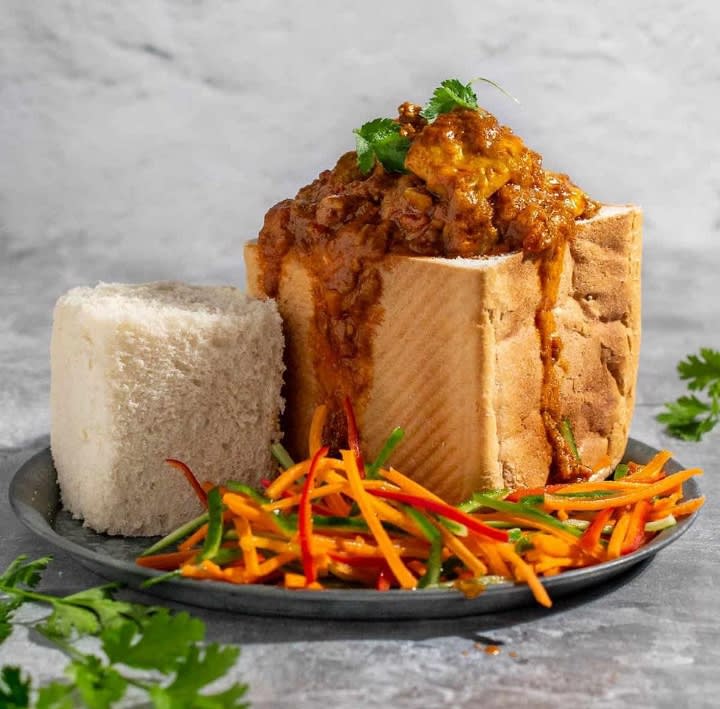
Today, Bunny Chow is enjoyed across South Africa and has become a must-try dish for visitors looking to experience authentic South African street food.
The Origin of Bunny Chow
Bunny Chow originated in Durban, KwaZulu-Natal, during the 20th century. Its history is closely associated with South Africa's Indian community, whose ancestors were brought to the country as indentured labourers during the colonial period.
There are several stories surrounding the exact origin of the dish. One popular account connects Bunny Chow to Indian restaurant workers and labourers in Durban who needed an inexpensive and convenient way to carry and eat curry. A hollowed-out loaf of bread provided a practical container, allowing the curry to be transported and eaten without conventional utensils.
The name “Bunny Chow” is also surrounded by different explanations, and its exact origin remains debated. Despite the uncertainty surrounding the name, the dish's connection to Durban's Indian culinary heritage is widely recognised.
What Makes Bunny Chow Special?
At its heart, Bunny Chow is remarkably straightforward: bread filled with curry. However, its appeal lies in the combination of textures and flavours.
The crusty exterior of the bread holds a rich curry, while the soft interior absorbs the spicy sauce. As the curry sits inside the bread, the loaf becomes increasingly flavourful, creating an eating experience that is both messy and satisfying.
Traditionally, Bunny Chow is eaten with the hands. Pieces of the bread can be torn away and used to scoop up the curry, making it an informal and communal-style meal.
Main Ingredients
The ingredients can vary depending on the recipe and type of curry used, but a traditional Bunny Chow generally includes:
A loaf of unsliced white bread
Meat, chicken, or beans
Potatoes
Onions
Tomatoes or tomato-based sauce
Garlic
Ginger
Curry powder or a blend of spices
Chilli
Cooking oil
Salt and other seasonings
Fresh coriander or other herbs
The bread is particularly important. It needs to be sturdy enough to hold a generous amount of curry without immediately falling apart.
How Bunny Chow Is Prepared
The curry is usually prepared first. Onions, garlic, ginger and spices are cooked together to create a fragrant base. The chosen meat or vegetables are then added, followed by potatoes and a sauce made from tomatoes or other ingredients.
The curry is allowed to simmer until the meat and potatoes become tender and the sauce thickens.
Meanwhile, a loaf of bread is cut into sections and the soft centre is removed, leaving a thick bread shell. The hot curry is then spooned directly into the hollowed loaf.
The removed bread is not wasted. It can be used to dip into the curry, making it an essential part of the meal.
Popular Types of Bunny Chow
Although curry is at the heart of Bunny Chow, there are several variations.
Mutton Bunny Chow
Mutton curry is one of the most traditional and popular choices. The meat is slowly cooked with potatoes and aromatic spices until tender and deeply flavoured.
Chicken Bunny Chow
Chicken Bunny Chow offers a lighter alternative while still delivering the rich curry flavour associated with the dish.
Bean Bunny Chow
Bean Bunny Chow is an affordable vegetarian-friendly variation. Beans are cooked in a spicy curry sauce, creating a filling meal without meat.
Vegetable Bunny Chow
Vegetables such as potatoes, carrots, peas and other seasonal produce can be cooked in a fragrant curry to create a completely vegetarian version.
Bunny Chow and Durban's Food Culture
Bunny Chow is inseparable from the food culture of Durban. The city is renowned for its large Indian South African population and its distinctive curry traditions.
Indian spices, South African ingredients and local culinary creativity come together in Bunny Chow, making it a powerful example of how food can develop through cultural interaction.
It is also strongly associated with casual dining and street-food culture. From small takeaway shops to restaurants and food festivals, Bunny Chow has become an important part of Durban's culinary identity.
How Bunny Chow Is Traditionally Served
One of the defining characteristics of Bunny Chow is its informal presentation.
Rather than being served on a traditional plate, the curry comes inside the bread itself. It is commonly eaten by hand, with pieces of bread torn away to scoop up the curry.
The meal can be served as a quarter, half, or full loaf, depending on the size and appetite of the diner. A quarter loaf is particularly common as an individual serving.
Nutritional Value
The nutritional value of Bunny Chow depends heavily on the curry used and the size of the serving.
The meat or beans can provide protein, while potatoes and bread supply carbohydrates that provide energy. Vegetables contribute vitamins, minerals and dietary fibre, while spices such as ginger, garlic and chilli add flavour without necessarily requiring large amounts of additional ingredients.
However, because Bunny Chow can be relatively high in carbohydrates and calories particularly when made with generous portions of bread, meat and oil it is best enjoyed as part of a balanced diet.
Bunny Chow Beyond South Africa
Although Bunny Chow originated in Durban, its popularity has spread far beyond the city and South Africa.
It has appeared on menus in different parts of the world as South African cuisine has gained international recognition. Its unusual presentation also makes it particularly memorable for people discovering the dish for the first time.
For many South Africans, however, Bunny Chow remains more than an international food trend. It represents a familiar taste of home, Durban's street-food culture and the country's diverse culinary heritage.
There is something wonderfully satisfying about Bunny Chow. It is hearty, affordable, flavourful and uncomplicated.
The combination of spicy curry and soft, sauce-soaked bread creates a contrast that keeps people coming back. It is also a meal designed for sharing and enjoyment without the formality of fine dining.
Perhaps most importantly, Bunny Chow tells a story. Every bite reflects the meeting of cultures, the creativity of communities and the ability of food to emerge from history and become an enduring part of national identity.
Bunny Chow is more than a loaf of bread filled with curry. It is a symbol of Durban's vibrant food culture and an important part of South Africa's culinary heritage. Born from a history of cultural exchange and shaped by Indian South African traditions, the dish has grown from a practical meal into one of the country's most recognisable foods.
From spicy mutton curry to comforting beans and vegetables, Bunny Chow continues to evolve while retaining the distinctive character that made it famous.
In South Africa, food doesn't just fill the stomach it tells stories. And Bunny Chow tells one of Durban's most delicious stories.
©2026|Osho Deborah|Talk Africa NG.com



Comments (0)
Leave a Comment