
Hernia is one of the most common structural problems affecting the human body. It occurs when an internal organ or tissue pushes through a weak spot in the muscle or connective tissue that normally holds it in place. Although it can look simple at first, often just a small bulge, it represents a failure in the body’s structural support system
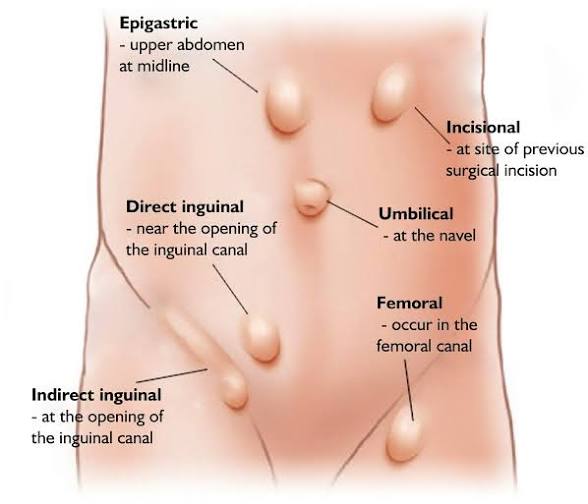
Hernias can affect people of all ages and may appear in different parts of the body, especially the abdomen, groin, and chest area. While many hernias are not immediately dangerous, they do not heal on their own and may gradually worsen over time if not properly managed.
Understanding What a Hernia Really Is
Under normal conditions, organs such as the intestines remain securely held in place by strong muscles and connective tissues. In a hernia, however, there is a weak point or opening in the muscle wall, allowing internal tissue to push through.
This protrusion may:
- Appear as a visible swelling or lump
- Increase in size when standing, coughing, or straining
- Reduce or disappear when lying down (in some cases)
Hernia is therefore not an infection or a surface problem, it is a structural defect inside the body.
Types of Hernia
Hernias are classified based on their location in the body. Each type has unique causes, risk factors, and symptoms.
1. Inguinal Hernia (Most Common Type)
The inguinal hernia occurs when part of the intestine pushes through a weak area in the lower abdominal wall into the groin region.
Key points:
- Most common type of hernia
- More frequent in males due to natural anatomy
- May extend into the scrotum in severe cases
Causes:
- Weak abdominal muscles
- Heavy lifting
- Chronic coughing or straining
- Congenital (present from birth) weakness
Symptoms:
- Bulge in the groin
- Pain or discomfort during movement
- Burning or heavy sensation
2. Hiatal Hernia
A hiatal hernia occurs when part of the stomach pushes upward through the diaphragm into the chest cavity.
Key points:
- Occurs inside the body (not visible externally)
- Common in adults over 50 years
- Often associated with acid reflux
Causes:
- Weak diaphragm muscles
- Aging
- Increased abdominal pressure
Symptoms:
- Heartburn (acid reflux)
- Chest discomfort
- Difficulty swallowing
- Bloating after meals
3. Umbilical Hernia
This type occurs when tissue pushes through the abdominal wall near the belly button.
Key points:
- Very common in infants
- Often resolves naturally in children
- Can also occur in adults
Causes:
- Weak abdominal wall at the umbilicus
- Pregnancy
- Obesity
- Increased abdominal pressure
Symptoms:
- Bulge near the navel
- Visible swelling when crying (in babies)
- Mild pain in adults
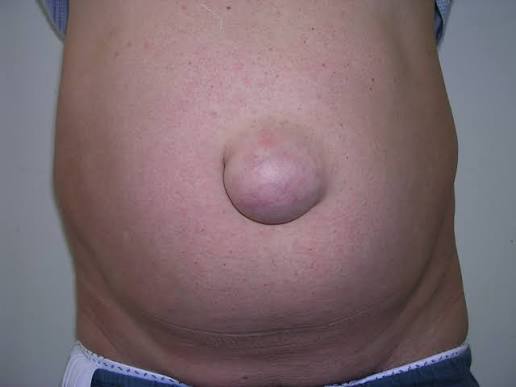
4. Ventral (Abdominal) Hernia
A ventral hernia occurs when tissue pushes through a weak spot in the abdominal wall.
Key points:
- Can occur anywhere in the abdominal wall
- Often linked to lifestyle or surgery
- May decrease when lying down
Causes:
- Obesity
- Pregnancy
- Heavy lifting
- Weak abdominal muscles
5. Incisional Hernia
This type develops at the site of a previous surgical incision.
Key points:
- Occurs after abdominal surgery
- Weak healing of surgical wound
- May enlarge over time
Causes:
- Infection after surgery
- Poor wound healing
- Early physical strain after operation
Symptoms of Hernia
Symptoms vary depending on type and severity, but common signs include:
✓Visible lump or bulge
✓Pain or discomfort (especially during movement)
✓Heaviness in the affected area
✓Burning or pressure sensation
✓Heartburn (in hiatal hernia)
Emergency warning signs:
- Sudden severe pain
- Red or dark-colored bulge
- Vomiting or nausea
- Inability to pass stool or gas
These may indicate a strangulated hernia, which is a medical emergency.
Causes and Risk Factors
Hernia develops due to a combination of muscle weakness and increased pressure.
Common causes:
✓ Heavy lifting
✓ Chronic coughing
✓ Constipation and straining
✓ Pregnancy
✓ Obesity
✓ Aging or congenital weakness
Risk factors:
- Family history of hernia
- Smoking (weakens connective tissue)
- Poor nutrition
- Previous abdominal surgery
Diagnosis of Hernia
Doctors diagnose hernias through:
1. Physical examination
They check for a bulge that increases when standing or coughing.
2. Imaging tests
- Ultrasound
- CT scan
- MRI
3. Special tests (for hiatal hernia)
- Barium swallow X-ray
- Endoscopy
Treatment Options
The only definitive treatment for a hernia is surgical repair, but not all cases require immediate surgery.
1. Watchful waiting: It is used when Hernia is still small and there's no form of pain or complication
2. Medications (for symptoms only)
Antacids for acid reflux
Acid-reducing drugs in hiatal hernia
3. Surgical repair
Two main types:
✓ Open surgery: The surgeon makes one cut (incision) near the hernia.
-The bulging tissue is gently pushed back into place.
-The weak muscle wall is stitched or reinforced, sometimes with a mesh (a small synthetic patch).
-The skin is then closed with stitches.
✓Laparoscopic (keyhole) surgery: The surgeon makes several small cuts instead of one big cut.
-A small camera (laparoscope) is inserted to see inside.
- Special instruments are used to repair the hernia and place a mesh.
- This method usually causes less pain and faster recovery.
Home Care and Lifestyle Management
While hernias cannot be cured at home, symptoms can be reduced by:
- Eating high-fiber foods to prevent constipation
- Avoiding heavy lifting
- Maintaining a healthy weight
- Avoiding smoking
- Eating smaller meals (for hiatal hernia)
Complications of Untreated Hernia
If ignored, a hernia may lead to:
- Obstruction (blockage of intestine)
- Strangulation (loss of blood supply to tissue)
- Tissue death (necrosis)
- Life-threatening infections
Prevention
Not all hernias can be prevented, but risk can be reduced by:
- Strengthening abdominal muscles
- Avoiding heavy lifting without support
- Managing chronic cough and constipation
- Maintaining a healthy weight
- Quitting smoking
Medical Disclaimer
The information provided in this article is for educational and informational purposes only. It is not intended to replace professional medical advice, diagnosis, or treatment.
All details, especially those related to treatment options for Hernia, are meant to help improve understanding and awareness only.
If you notice any symptoms or signs of a hernia or any other health condition, please do not self-diagnose or self-treat. Kindly consult a qualified healthcare professional or visit a hospital for proper evaluation and management.
Always seek the advice of your doctor or other qualified health provider with any questions you may have regarding a medical condition.
Conclusion
Hernia is a mechanical failure of muscle or tissue strength, not an infection. Although it may begin as a small, painless bulge, it can progress into a serious condition if left untreated. Early recognition, lifestyle adjustments, and medical intervention when necessary are key to preventing complications.
© 2026 Ukachi Rejoice| TalkAfricang.com



Comments (0)
Leave a Comment