
Nigeria Airways was Nigeria's national airline and one of the country's most recognizable symbols of aviation for over four decades. Established on 23 August 1958 after the dissolution of the West African Airways Corporation (WAAC), it began operations on 1 October 1958 and served as Nigeria's flag carrier until its collapse in 2003.
In its early years, the airline was known as WAAC Nigeria before adopting the name Nigeria Airways in 1971. Initially, the Nigerian government held a majority stake, but by 1961 it had acquired full ownership, making the airline entirely state-owned.
During the 1970s and early 1980s, Nigeria Airways experienced its golden age. Its fleet grew to around 30 aircraft, including Boeing 737s, Boeing 747s, Airbus A310s, DC-10s, and the famous VC10 jets. The airline connected Nigerian cities with destinations across Africa, Europe, North America, and the Middle East, becoming a source of national pride.
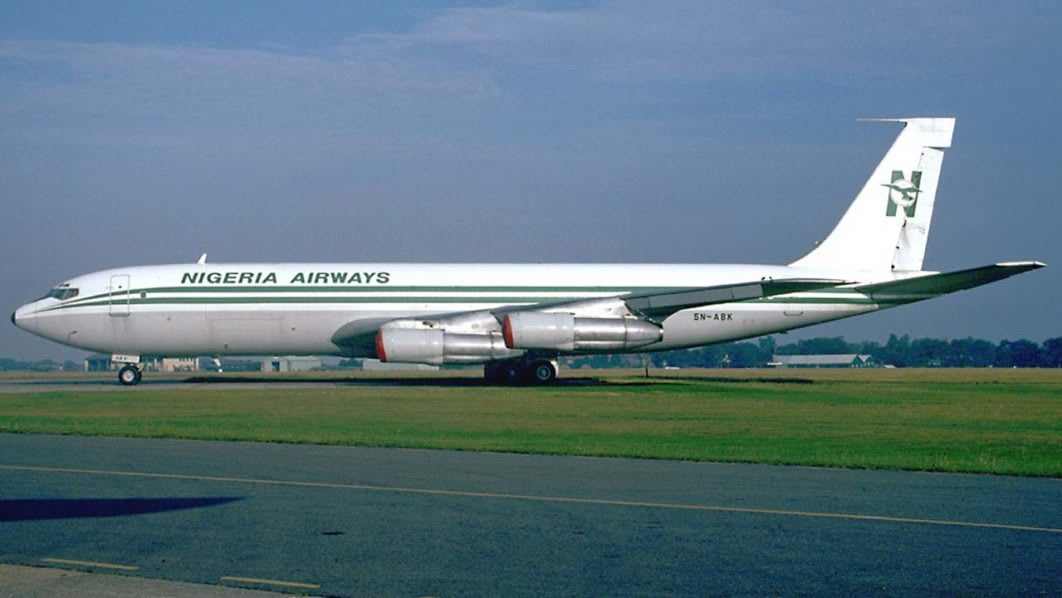
However, from the mid-1980s onward, the airline began to decline. Financial difficulties, political interference, corruption, poor management, overstaffing, and mounting debts weakened its operations. Aircraft maintenance became difficult, routes were reduced, and service quality suffered. By the early 2000s, only a handful of aircraft remained operational.
In 2003, Nigeria Airways officially ceased operations. At the time of its closure, the airline was heavily indebted and had only a very limited fleet left. Its collapse marked the end of an era in Nigerian aviation.
Today, Nigeria Airways remains a powerful reminder of both Nigeria's aviation ambitions and the importance of sustainable management. Though the airline no longer exists, its story continues to occupy an important place in the history of Nigerian transportation.

But beyond that,
The green-white-green once flew upon silver wings, carrying dreams from Lagos to London, Kano to New York.
Its engines have long fallen silent, yet its memory still crosses the skies.
Nigeria Airways was more than an airline; it was a symbol of a nation's journey, a journey that soared high, stumbled hard, and remains remembered among the clouds of history.
© 2026 Ikeun Divine Michael | TalkAfricang.com


Comments (0)
Leave a Comment