
Have you ever heard someone say they have an ovarian cyst and wondered what it really means?
Ovarian cysts are actually very common, especially in young women, and in most cases, they are nothing to panic about. However, understanding what they are, why they happen, and when to seek help is very important for your health.
What is an Ovarian Cyst?
An ovarian cyst is a fluid-filled sac that forms in or on the ovary.
Most cysts develop as part of the normal menstrual cycle, especially during ovulation (when the ovary releases an egg). These types are usually harmless and often go away on their own within a few weeks or months.
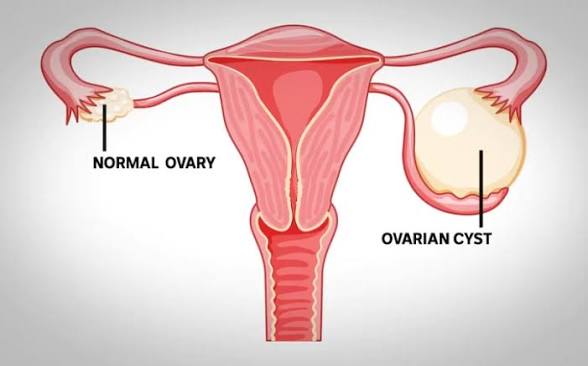
Types of Ovarian Cysts
- Functional Cysts (Most Common)
- Follicular cysts: Occur when the follicle fails to release an egg.
- Corpus luteum cysts: Form when the follicle closes after releasing an egg.
- Endometriomas: Caused by endometriosis, where uterine tissue grows on the ovaries.
- Dermoid Cysts: develop from reproductive cells and may contain hair, skin, or fat.
- Cystadenomas: Form on the surface of the ovary and may contain fluid or mucus.
Why Do Ovarian Cysts Occur?
The most common cause is ovulation, but other factors can also lead to cyst formation:
- Hormonal imbalance – can affect how the ovary releases eggs
- Endometriosis – when tissue meant to line the womb grows outside it
- PCOS (Polycystic Ovary Syndrome) – causes multiple small cysts
- Pelvic infections – severe infections can spread to the ovaries
- Abnormal cell growth – can lead to different types of cysts
Who is at Risk?
While anyone with ovaries can develop cysts, the chances are higher if you:
- Are still having menstrual periods
- Have had ovarian cysts before
- Have hormonal conditions like PCOS
- Use fertility medications
Signs and Symptoms to Watch For
Many ovarian cysts don’t cause any symptoms. But when they do, you may notice:
- Pain in the lower abdomen or pelvis
- A feeling of fullness or bloating
- Frequent urination or constipation
- Pain during sex
- Irregular or heavy periods
When It Becomes Serious
Although rare, complications can happen.
Warning signs include:
- Sudden, severe abdominal pain
- Nausea and vomiting
- Dizziness or fainting
These could mean:
- The cyst has burst (ruptured)
- The ovary has twisted (ovarian torsion)
These are medical emergencies and require immediate attention.
What Does a Burst Cyst Feel Like?
A ruptured cyst often feels like:
- Sharp, sudden pain on one side of the lower abdomen
- Nausea or vomiting
- Bloating
- Sometimes vaginal bleeding
How Are Ovarian Cysts Diagnosed?
Doctors may use:
- Pelvic examination
- Ultrasound scan to see the cyst clearly
- Pregnancy test to rule out other causes
- Minor surgery (laparoscopy) in some cases
Treatment Options
Treatment depends on the size, type, and symptoms.
1. Watchful Waiting
Most cysts disappear on their own within 2–3 months.
2. Medications
Hormonal pills may be given to prevent new cysts, but they don’t shrink existing ones.
3. Surgery
This may be needed if the cyst:
- Is large
- Causes pain
- Keeps growing
- Looks suspicious
Can Ovarian Cysts Be Prevented?
Not always. Since many cysts are part of the normal cycle, prevention isn’t always possible.
However:
- Hormonal medications can reduce the chances of new cysts
- Regular check-ups can help detect problems early
When Should You See a Doctor?
Visit a healthcare provider if you experience:
- Persistent abdominal or pelvic pain
- Irregular or painful periods
- Bloating that doesn’t go away
- Pain during intercourse
Final Thoughts
Ovarian cysts are common and usually harmless, especially in young women. In many cases, they go away without any treatment.
The key is to stay informed, pay attention to your body, and seek medical help when something feels unusual.
Your health matters: never ignore persistent pain or sudden symptoms.
© 2026 Ukachi Rejoice| TalkAfricang.com


Comments (0)
Leave a Comment