Obi Raises Alarm Over Vote-Buying as Lawmakers Resist Reform

Obi Raises Alarm Over Vote-Buying as Lawmakers Resist Reform

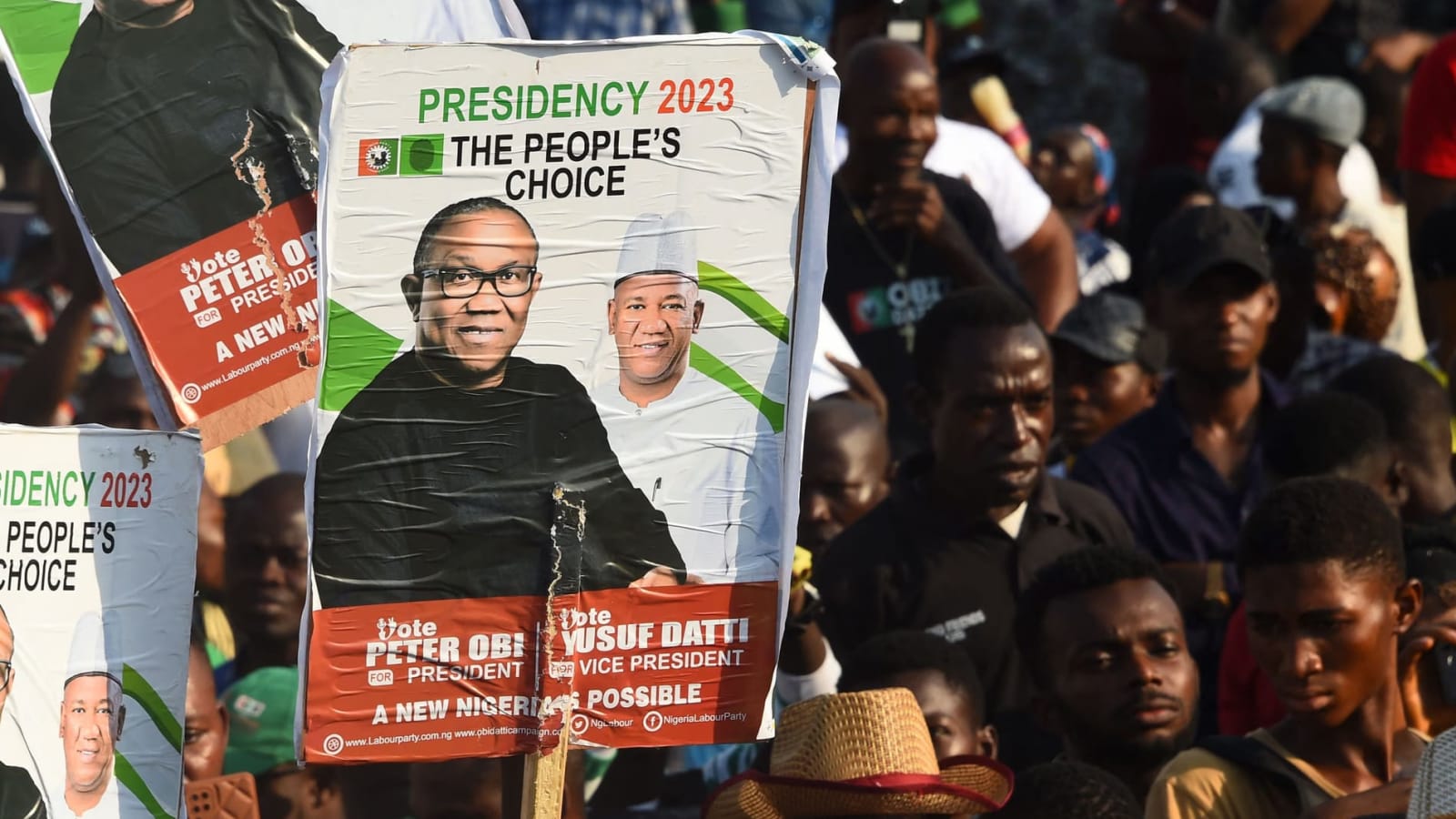
Former Anambra State governor Peter Gregory Obi has criticised lawmakers over vote-buying laws.

Former Nigerian presidential candidate Peter Gregory Obi has criticised members of the National Assembly for failing to criminalise vote-buying during party primaries, warning that the decision could further weaken Nigeria’s democratic process.

Mr Obi, a former governor of Anambra State, made the remarks while reacting to recent legislative discussions on proposed electoral reforms. He argued that political parties form the foundation of the country’s electoral system and that malpractice at the primary level often influences outcomes in general elections.

“When vote-buying is tolerated during party primaries, it becomes extremely difficult to prevent it during general elections.This practice undermines internal party democracy and encourages leadership selection based on money rather than merit.” Peter Gregory Obi said

Lawmakers recently declined to extend criminal sanctions on vote-buying to party primaries, a move that has drawn criticism from civil society organisations and election observers.

Analysts say vote-buying has become one of the most persistent challenges facing Nigeria’s elections, affecting voter confidence and the credibility of electoral outcomes. Critics argue that loopholes in the law allow the practice to flourish during party primaries, where enforcement is often weak.

The Independent National Electoral Commission (INEC) has repeatedly warned that unchecked vote-buying poses a serious threat to free and fair elections. The electoral body has called for stronger legal frameworks to curb the practice across all stages of the electoral process.

Mr Obi urged lawmakers to reconsider their position and prioritise reforms that strengthen accountability within political parties, noting that credible elections must begin from transparent candidate selection processes.

The debate has reignited wider discussions about electoral integrity, political accountability, and the pace of democratic reforms in Nigeria as the country looks ahead to future elections.

© 2025 Aliu Azeema | TalkAfrica NG

Delivering Africa’s Political Pulse with Integrity and Insight.
Filed under: newspoliticseconomy

Share this article

Keep Reading

More stories you might find interesting

Taiwo Oyedele Dismisses ₦80 Trillion Borrowing Claim, Defends Tinubu's Fiscal Record
news

Taiwo Oyedele Dismisses ₦80 Trillion Borrowing Claim, Defends Tinubu's Fiscal Record

Chairman of the Presidential Committee on Fiscal Policy and Tax Reforms, Taiwo Oyedele, has dismissed claims that President Bola Ahmed Tinubu's administration borrowed ₦80 trillion, describing the widely circulated figure as false and based on a misunderstanding of Nigeria's public debt data. Oyedele made the clarification on Monday, July 20, 2026, during an economic review session organised by the Senate Committee on Finance, where lawmakers examined the country's fiscal position and debt profile.

NIGERIA'S STOCK MARKET IS NOW THE BEST-PERFORMING IN THE WORLD
news

NIGERIA'S STOCK MARKET IS NOW THE BEST-PERFORMING IN THE WORLD

Bloomberg data confirms the NGX has overtaken South Korea's Kospi to lead all 92 global exchanges tracked this year, driven by financial-services stocks, FX reforms, and a pending frontier-market upgrade Photo: Premium Times — Stockbrokers on the trading floor of the Nigerian Exchange, Lagos Nigeria's stock market has become the best-performing equity market in the world in dollar terms, according to Bloomberg data tracking 92 global exchanges. The Nigerian Exchange (NGX) benchmark index has returned 67 percent year-to-date, narrowly ahead of South Korea's Kospi at 66 percent the previous global leader.

THE CHANGE WE AREN'T READY FOR
politics

THE CHANGE WE AREN'T READY FOR

Everyone wants a better Nigeria. But what if Nigeria is waiting for us first? At every gathering — weddings, WhatsApp groups, church meetings — Nigerians recite the same grievances: failed promises, stolen budgets, roads that vanish after one rainfall. We are fluent in complaint. But here is the harder question: if Nigeria became, overnight, the nation we say we want, would our own daily habits be worthy of it — or would we quietly rebuild the dysfunction we just escaped? This is not an attempt to excuse bad governance or shift responsibility from those in power, it is a move to confront the uncomfortable truth. Nigeria's greatest problem may not be the government alone, It may also be Nigerians — all of us, in the small choices we make when no one is watching.

Comments (0)

Leave a Comment

0/1000
Loading comments...