The Brazilian Baracoon in Badagry: Seriki Williams Abass and Nigeria’s Slave Trade.

The Brazilian Baracoon in Badagry: Seriki Williams Abass and Nigeria’s Slave Trade.

The Brazilian Baracoon in Badagry is one of the most important surviving sites connected to the transatlantic slave trade in Nigeria. This painful history involves Seriki Williams Abass.

Before he became powerful, Seriki Williams Abass was once powerless. He was not born rich or influential. His original name was Ifaremilekun Fagbemi, a Yoruba boy born in Joga-Orile, a town in Ilaro, Ogun State, what is now south-western Nigeria. As a youth, he was captured during wars between African communities. At the time, this was common, as stronger groups often sold captives to slave traders in exchange for goods and weapons.

Seriki Williams Abass, a former enslaved African who became a slave trader in Badagry during the transatlantic slave trade.

Ifaremilekun was sold first within West Africa and later sold again to Brazilian slave traders. This was how he ended up in Brazil, living as an enslaved person in a strange land. In Brazil, his experience was different from that of many other enslaved Africans. His owner, a Brazilian trader known as Williams, noticed his intelligence. Instead of using him only for hard labour, he trained him to read and write, speak Portuguese, and understand trade and business.

Later, Williams freed him, because he wanted him as a business partner in the slave trade. Ifaremilekun escaped slavery, but he did not escape the slave system.

When he returned to West Africa, he no longer came back as a victim. He returned with education, foreign connections, and access to money and power. He settled in Badagry, which was one of the busiest slave-trading ports of the nineteenth century. There, he fully joined the trade, helping to capture, hold, and sell other Africans to European and Brazilian merchants and he adopted the name Seriki Williams Abass. Seriki was a title, meaning leader, Williams came from his Brazilian owner, and Abass was linked to earlier slave merchants.

The Brazilian Baracoon in Badagry, where enslaved Africans were confined before the transatlantic slave trade.

The Brazilian Baracoon was a prison built for profit. Inside the Baracoon were about forty small rooms, each designed to hold around forty captives at a time. This meant that more than 1,600 men, women, and children could be confined in the compound at once. The rooms were dark, poorly ventilated, and extremely cramped. Captives were chained at the necks and ankles and forced to sit or lie on bare floors for weeks or months while traders waited for buyers or ships.

Human lives were priced like goods. Enslaved Africans were exchanged for mirrors, umbrellas, cowries, pieces of cloth, gin or rum, guns, and gunpowder. In some cases, a strong adult male could be traded for a barrel of alcohol or a box of firearms, while women and children were often valued less.

When ships arrived, captives were marched from the Baracoon through Badagry, across the lagoon, towards the beach now known as the Point of No Return. Many died during the Middle Passage, while survivors arrived in the Americas stripped of freedom.

The Point of No Return in Badagry, the final route enslaved Africans walked before boarding slave ships.

Seriki Williams Abass later ruled Badagry under British indirect rule, became extremely wealthy, and died in 1919. He was buried inside the Baracoon compound itself.

The Brazilian Baracoon stands as a museum today to remember the victims and reveal a hard truth that the transatlantic slave trade was organised, profitable, and sustained by both foreign powers and African collaborators.

© 2025 Bernice Temitayo Olusaiye | Talkafricang.com

Share this article

Keep Reading

More stories you might find interesting

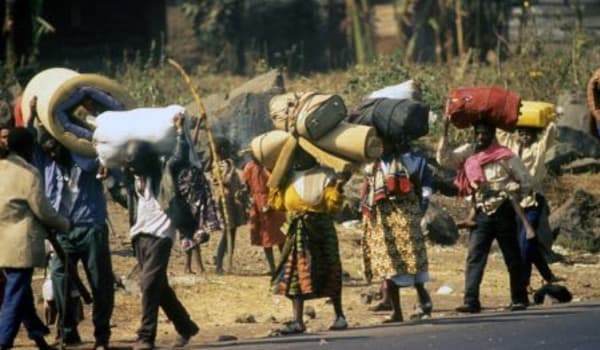
The Rwanda Genocide: How More Than 800,000 People Were Killed in 100 Days
african-history

The Rwanda Genocide: How More Than 800,000 People Were Killed in 100 Days

The 1994 Rwanda Genocide claimed more than 800,000 lives in about 100 days, but how did neighbours turn against one another, and why did the world fail to stop the killings? Discover how the genocide began, what happened to its victims, and the lessons this dark chapter of African history tells the world today.

Injera and Doro Wat: The Dish Ethiopia Saves for Celebration
culture

Injera and Doro Wat: The Dish Ethiopia Saves for Celebration

In Ethiopia, a meal is rarely just about eating. It is about sitting together, sharing one platter and making sure no one at the table is left out. Few dishes capture this spirit better than injera with doro wat, a pairing of sour, spongy bread and fiery chicken stew that has anchored Ethiopian celebrations for generations.

Nigeria Confirms Ebola Case in Abuja as Health Authorities Trace 44 Contacts
health

Nigeria Confirms Ebola Case in Abuja as Health Authorities Trace 44 Contacts

Nigeria has confirmed an imported case of Ebola virus disease in the Federal Capital Territory, Abuja, after laboratory tests returned positive for a woman who recently travelled from Uganda, prompting health authorities to begin tracing people who may have been exposed to the infection. The Coordinating Minister of Health and Social Welfare, Professor Muhammad Ali Pate, confirmed the case on Tuesday, 20 October, stating that the patient had been isolated and was receiving medical care at a private hospital in Abuja. According to the minister, health officials have identified 44 contacts and commenced efforts to determine whether anyone else may have been exposed to the virus.

Comments (0)

Leave a Comment

0/1000
Loading comments...

The Brazilian Baracoon in Badagry: Seriki Williams Abass and Nigeria’s Slave Trade.

The Brazilian Baracoon in Badagry: Seriki Williams Abass and Nigeria’s Slave Trade.

The Brazilian Baracoon in Badagry is one of the most important surviving sites connected to the transatlantic slave trade in Nigeria. This painful history involves Seriki Williams Abass.

Before he became powerful, Seriki Williams Abass was once powerless. He was not born rich or influential. His original name was Ifaremilekun Fagbemi, a Yoruba boy born in Joga-Orile, a town in Ilaro, Ogun State, what is now south-western Nigeria. As a youth, he was captured during wars between African communities. At the time, this was common, as stronger groups often sold captives to slave traders in exchange for goods and weapons.

Seriki Williams Abass, a former enslaved African who became a slave trader in Badagry during the transatlantic slave trade.

Ifaremilekun was sold first within West Africa and later sold again to Brazilian slave traders. This was how he ended up in Brazil, living as an enslaved person in a strange land. In Brazil, his experience was different from that of many other enslaved Africans. His owner, a Brazilian trader known as Williams, noticed his intelligence. Instead of using him only for hard labour, he trained him to read and write, speak Portuguese, and understand trade and business.

Later, Williams freed him, because he wanted him as a business partner in the slave trade. Ifaremilekun escaped slavery, but he did not escape the slave system.

When he returned to West Africa, he no longer came back as a victim. He returned with education, foreign connections, and access to money and power. He settled in Badagry, which was one of the busiest slave-trading ports of the nineteenth century. There, he fully joined the trade, helping to capture, hold, and sell other Africans to European and Brazilian merchants and he adopted the name Seriki Williams Abass. Seriki was a title, meaning leader, Williams came from his Brazilian owner, and Abass was linked to earlier slave merchants.

The Brazilian Baracoon in Badagry, where enslaved Africans were confined before the transatlantic slave trade.

The Brazilian Baracoon was a prison built for profit. Inside the Baracoon were about forty small rooms, each designed to hold around forty captives at a time. This meant that more than 1,600 men, women, and children could be confined in the compound at once. The rooms were dark, poorly ventilated, and extremely cramped. Captives were chained at the necks and ankles and forced to sit or lie on bare floors for weeks or months while traders waited for buyers or ships.

Human lives were priced like goods. Enslaved Africans were exchanged for mirrors, umbrellas, cowries, pieces of cloth, gin or rum, guns, and gunpowder. In some cases, a strong adult male could be traded for a barrel of alcohol or a box of firearms, while women and children were often valued less.

When ships arrived, captives were marched from the Baracoon through Badagry, across the lagoon, towards the beach now known as the Point of No Return. Many died during the Middle Passage, while survivors arrived in the Americas stripped of freedom.

The Point of No Return in Badagry, the final route enslaved Africans walked before boarding slave ships.

Seriki Williams Abass later ruled Badagry under British indirect rule, became extremely wealthy, and died in 1919. He was buried inside the Baracoon compound itself.

The Brazilian Baracoon stands as a museum today to remember the victims and reveal a hard truth that the transatlantic slave trade was organised, profitable, and sustained by both foreign powers and African collaborators.

© 2025 Bernice Temitayo Olusaiye | Talkafricang.com

Share this article

Comments (0)

Leave a Comment

0/1000
Loading comments...