
 In the Hausa-speaking regions of Northern Nigeria, clothing is never just about covering the body. It is about identity, respect, and memory. Among the many traditional garments that define Hausa culture, none carries as much weight, both literally and symbolically, as the “Babban Riga”. The Babban Riga in its literal meaning is “big gown”, but beyond being a clothing, it is a symbol of authority, dignity, and cultural history.
A Garment Born of History
The origin of the Babban Riga stretches back centuries, to a time when Hausa city-states such as Kano, Katsina, and Zaria were major centers of learning and commerce. Through trans-Saharan trade routes, Northern Nigeria became connected to North Africa and the wider Islamic world. Thus, with the need for attires that reflected status and moral authority by scholars, rulers, and traders, the Babban Riga was provided as a solution to their problem. This was through the inspiration of Sahelian and Islamic styles.
The Language of Embroidery
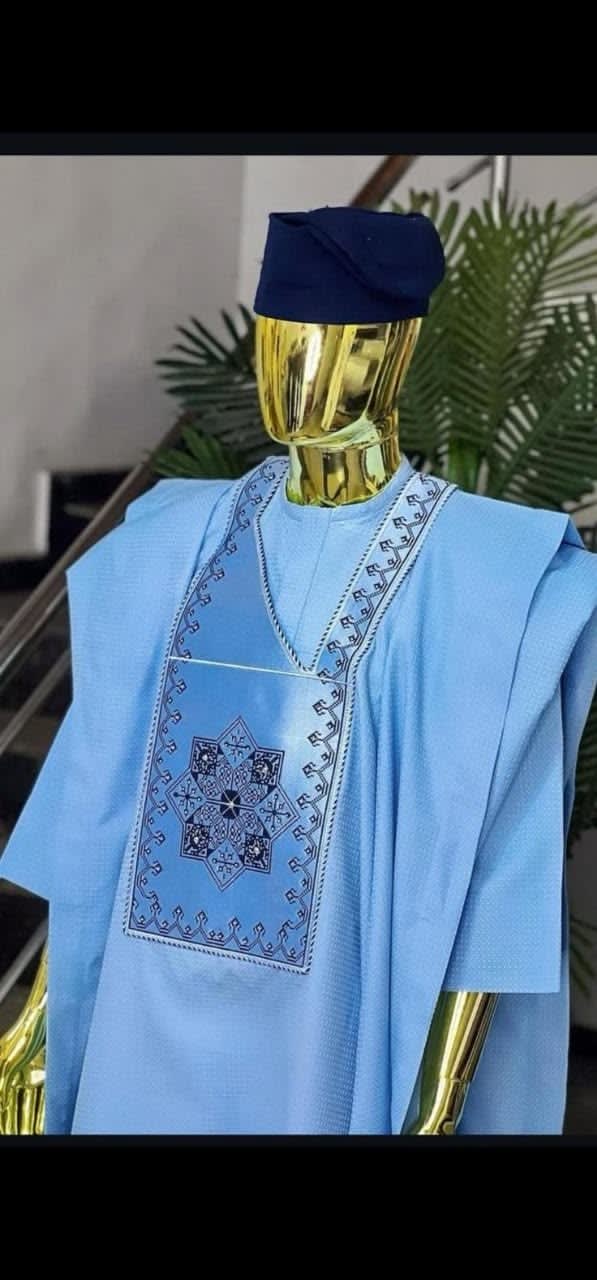
Of course, the attire is a stunning piece on its own, but what truly distinguishes the Babban Riga is the elaborate embroidery around its neckline and chest, known locally as “zane”. This embroidery is not a random decoration. Each stitch reflected:
. Skill and patience of the artisan;
. Status and maturity of the wearer; and,
. Cultural pride rooted in Hausa identity.
Symbolic Feature
Traditionally, the Babban Riga was worn by individuals of high moral standing, social status, and great intellectual capabilities. These individuals included the emirs, Islamic scholars, elders, and community leaders. It portrayed the individual as wise, responsible, and honourable. Hence, it was rarely worn by young men; it was an attire one grew into. To wear it was to announce one’s place as a custodian of values and tradition.
Religious Faith, Modesty, and Meaning
Islam plays a central role in Hausa culture, and the Babban Riga aligns seamlessly with Islamic principles of modesty and humility. Its loose fit allows freedom of movement while maintaining decency, making it ideal for religious occasions.This is why the Babban Riga is commonly seen during:
. Eid celebrations;
. Friday prayers; and,
. Weddings and naming ceremonies.
In these moments, the garment becomes part of a larger spiritual and cultural expression.
Babban Riga in Modern Times
Modern fashion has brought changes; lighter fabrics, new colors, and contemporary tailoring, but the essence of the Babban Riga remains untouched. Whether worn at a royal event or a family celebration, it still carries the same symbolism it did generations ago. For many Hausa people today, wearing the Babban Riga is an act of cultural preservation. It is a way of saying, “we remember who we are, and we honor where we come from”.
In view of all portrayed above, the Babban Riga is more than a robe. It is not just a sewn cloth. It is history worn on the body, a reminder that culture lives not only in books or museums, but in everyday expressions - what people wear, how they gather, and what they choose to preserve. In a fast-changing world, the Babban Riga stands tall and flowing, quietly telling a story that refuses to fadeinto the obscene.
©️2026 Ezeh Nmesoma Lydia| TalkAfricang.com

Comments (0)
Leave a Comment