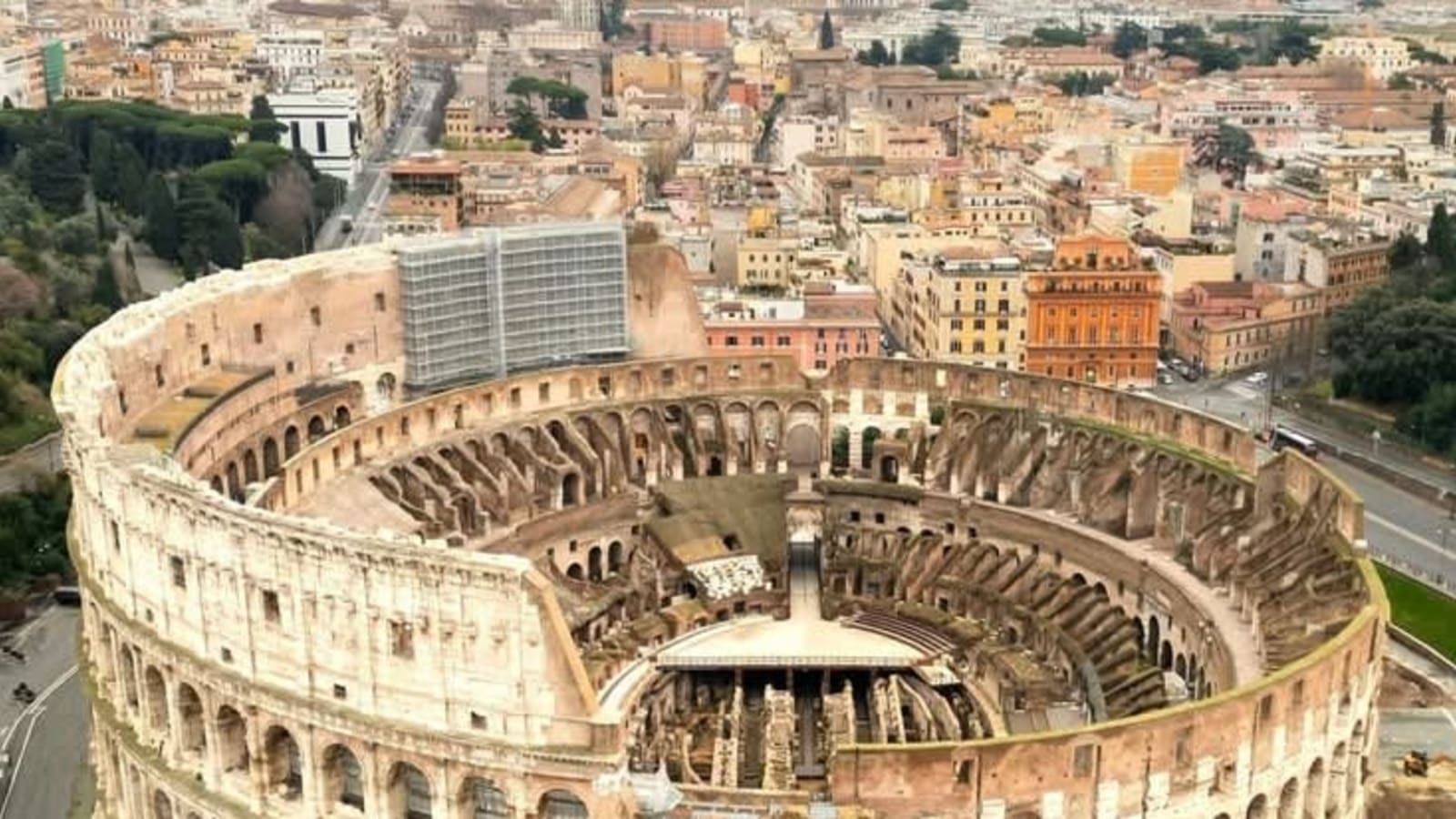
In the heart of Tunisia, in the small town of El Jem, stand the extraordinary remains of one of the Roman Empire's most impressive architectural achievements: the Amphitheatre of El Jem.

Known in ancient times as Thysdrus, the town flourished under Roman rule, becoming an important centre of agriculture and trade, particularly in olive oil. Its prosperity eventually gave rise to an architectural masterpiece that would become one of the most remarkable Roman structures on the African continent.
Constructed between approximately 238 and 250 AD, the amphitheatre was modelled after Rome's famous Colosseum. However, it was no ordinary imitation. Built entirely from massive stone blocks, the structure was designed to stand independently on flat ground, supported by an ingenious system of arches and vaults rather than a natural hillside.

Measuring approximately 148 metres by 122 metres, the amphitheatre could accommodate an estimated 35,000 spectators. Its three levels of impressive arcades and enormous underground passages reveal the engineering sophistication of Roman builders.
Like other Roman amphitheatres, El Jem hosted public spectacles, including gladiatorial contests and displays involving wild animals. Beneath its arena were underground chambers and passages where animals and equipment were kept before being brought into the arena through specially designed openings.
However, the glory of Thysdrus did not last forever. As Roman authority declined in North Africa, the amphitheatre gradually lost its original purpose. Over subsequent centuries, it became a refuge and defensive stronghold for local inhabitants. Its walls were damaged during conflicts, particularly in the seventeenth and nineteenth centuries.

Despite centuries of change, much of the structure survived. Today, visitors can explore its ancient seating areas, underground chambers and towering stone corridors, gaining a glimpse into the world of Roman Africa.
In recognition of its exceptional historical and architectural significance, the Amphitheatre of El Jem was designated a UNESCO World Heritage Site in 1979.
Beyond its historical importance, the monument continues to serve a cultural purpose, occasionally hosting performances and the International Festival of Symphonic Music.
El Jem is more than an ancient entertainment arena; it is a testament to the architectural legacy of an empire and the enduring historical significance of North Africa.
Did You Know? Although Rome's Colosseum is more famous, the Amphitheatre of El Jem is among the largest Roman amphitheatres ever constructed and is widely regarded as the largest surviving Roman amphitheatre in North Africa. Its estimated capacity of 35,000 spectators is remarkable considering that it was built in a relatively small Roman provincial town. Location: El Jem, Mahdia Governorate, Tunisia. Construction: Approximately 238–250 AD. Ancient name: Thysdrus. UNESCO inscription: 1979.
© 2026 Ikeun Divine Michael | TalkAfricang.com
















Comments (0)
Leave a Comment